My name is Yaya Cham, a CorpsAfrica Volunteer serving in the Upper River Region of The Gambia, in a community called Yerro Bawol. The community is predominantly Fula, and the people speak the Fula dialect.
When I joined CorpsAfrica, I assumed volunteers would be deployed to communities that matched their ethnic backgrounds or at least to places where communication would be easier. Whenever I was asked how many languages I speak, I would proudly reply, “Four: English, Arabic, French, and my native language, “Wolof.” I was confident I would be sent to a Wolof-speaking community to make my service smooth and comfortable.
But everything changed on site announcement day.
It was a beautiful morning. The sun rose over the horizon, casting a warm golden glow across the bustling grounds. Volunteers gathered anxiously, whispers filling the air as we waited. Staff members smiled, ready to share the news.
Finally, the moment arrived. Ousman and Kalipha, our Volunteer Liaisons, stood and began calling names confidently, no pauses, no glances at a list. We were all in awe. Hearts pounded as each name echoed through the hall.
When they called my name, I thought, “Wait… what? Me?!” I scanned the crowd, convinced it was a mistake. But I was the only Yaya Cham in the hall. The cheers from my friends confirmed that I was going to a Fula community.
Upon arriving and settling into my community, the only Fula word I knew was “Jamtan,” meaning “I am fine.” So whenever someone tried to start a conversation, I would simply respond, “Jamtan.” Some would smile and correct me gently. Others would burst into laughter. It was humbling, but also the beginning of growth.
The first full phrase I learned was “Wara nyamo” which means “Come and eat.” I learned it quickly because I never wanted to be left out when food was served! But beyond the laughter and food, I knew that true integration required more than vocabulary.
In my desire to truly belong, I even changed my surname from Cham to Bah, just to fit into the society and be seen as one of them. It was my way of showing respect, breaking barriers, and smoothing my integration into the community. That simple change sparked smiles and opened doors for deeper conversations.
I told myself that if I wanted to progress, I should not be afraid of being laughed at but instead learn from my mistakes. I stopped speaking English with my counterpart and began noting down the words I frequently used. For a while, I felt confident, until house-to-house visits reminded me that I still had a long way to go.
Sometimes I would sit quietly with community members, exchanging long looks before excusing myself. Other times, they would help me form sentences, putting words into my mouth as we laughed together. Each encounter became a lesson.
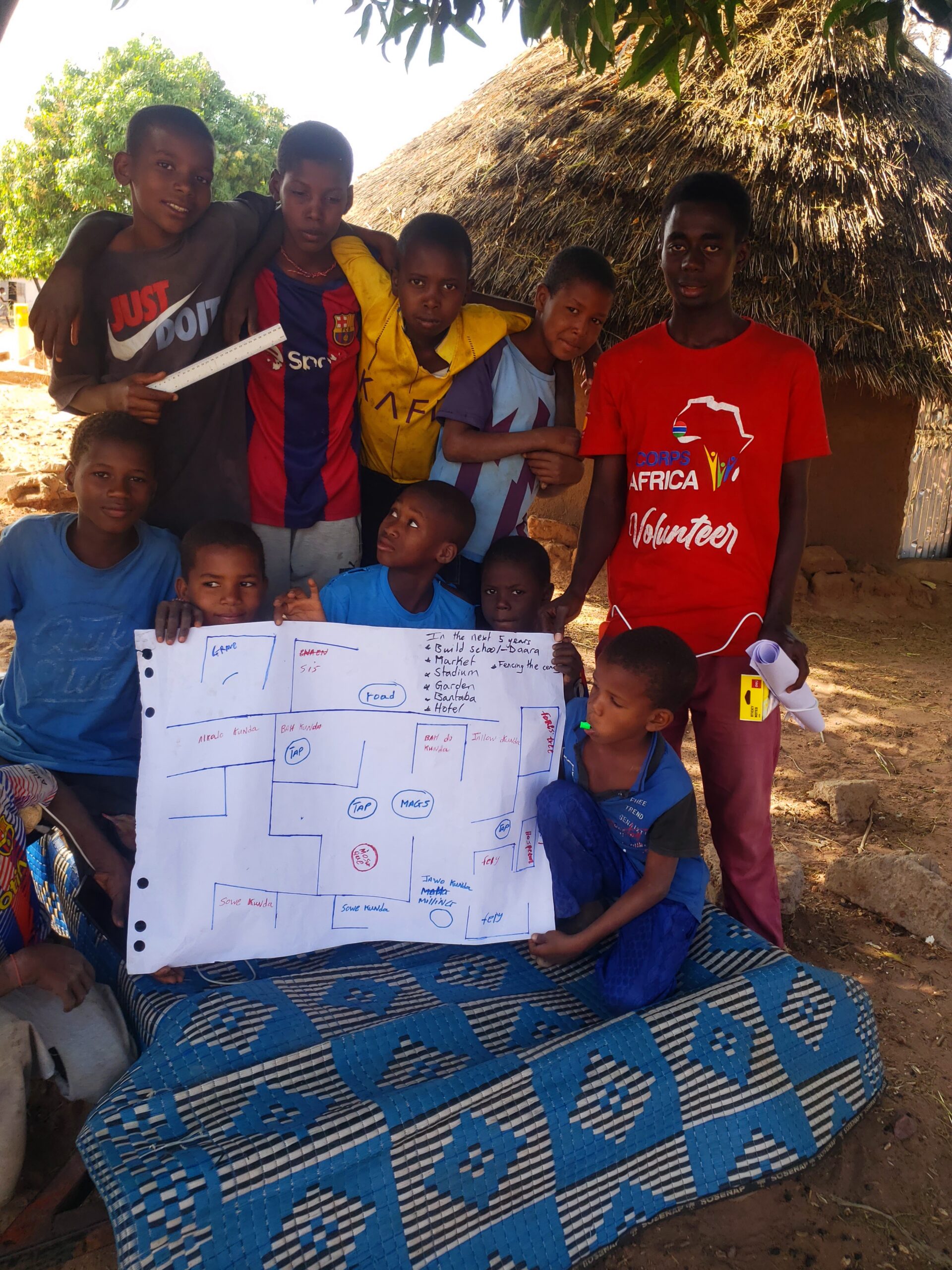
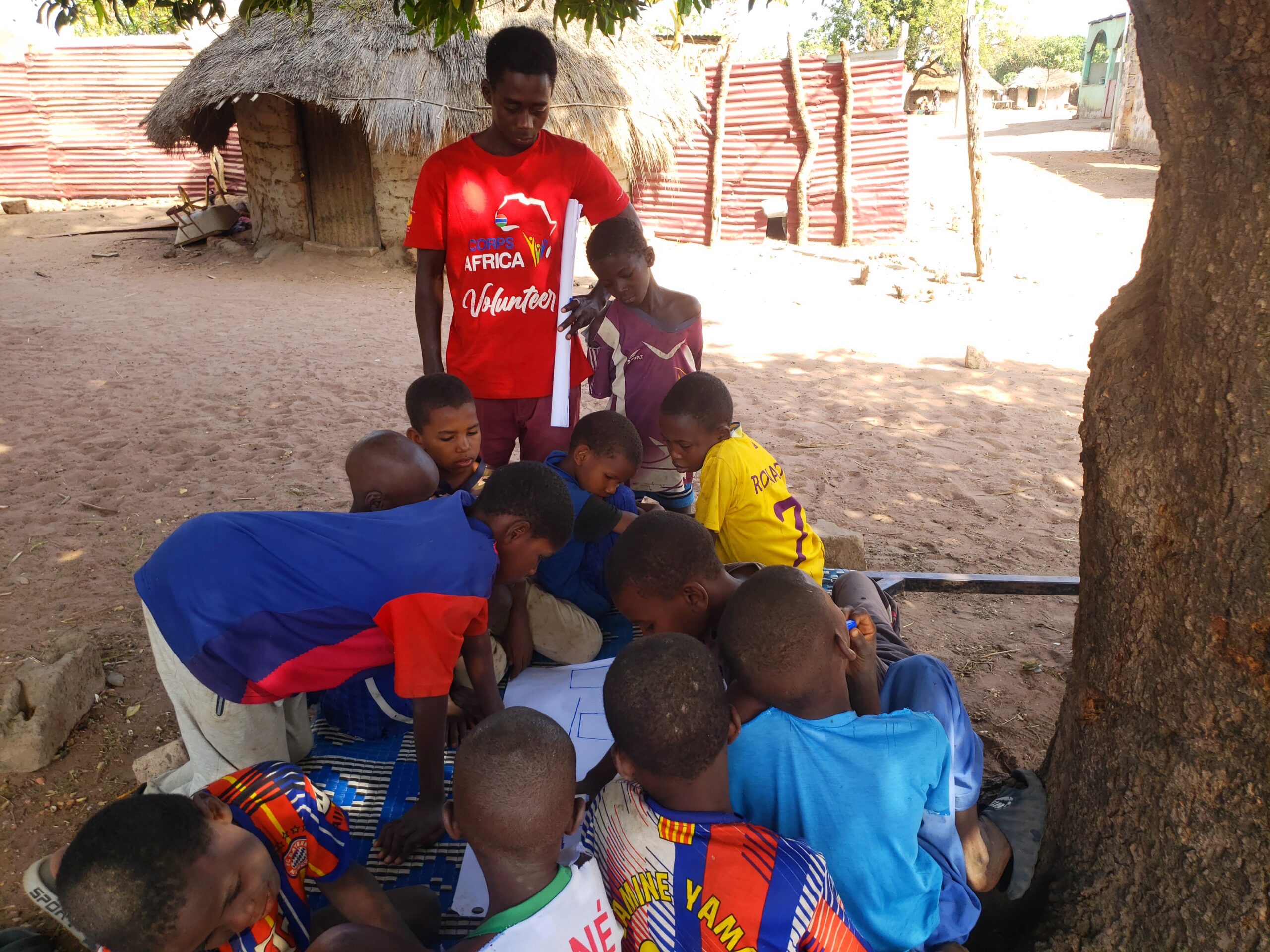
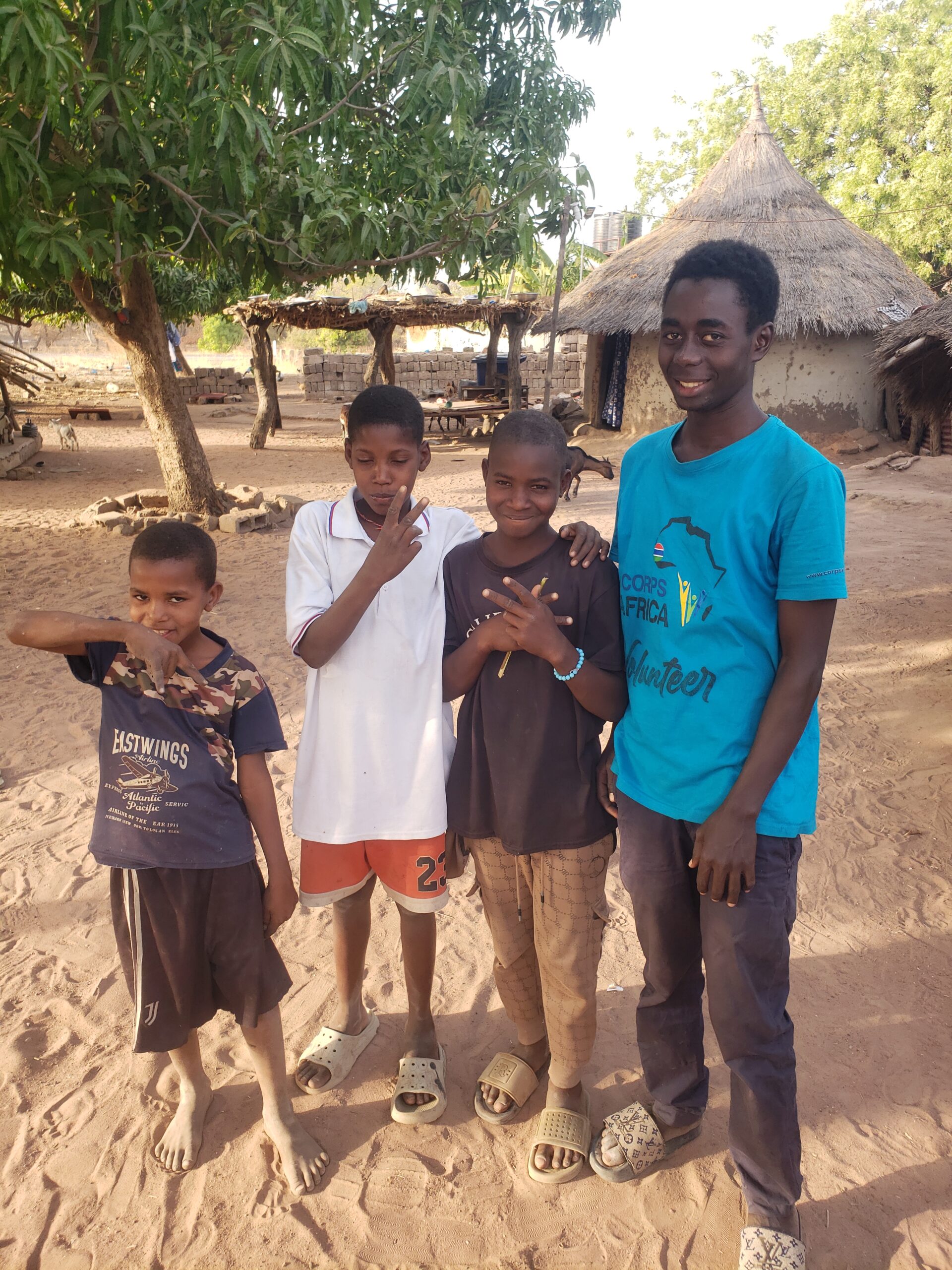
One of my greatest teachers turned out to be the children. Playing with them transformed my learning experience. Every word they spoke and every action they demonstrated became a learning opportunity. They never grew tired of correcting me. They laughed with me, not at me, and patiently helped me improve.
Today, I understand that service is not about comfort, it is about connection. Being placed in a Fula-speaking community did not limit me, it stretched me. It taught me humility, courage, and the beauty of stepping outside my comfort zone.
Language is more than words. It is trust. It is respect. I am learning how to belong.
And in Yerro Bawol, I am learning one word at a time.