
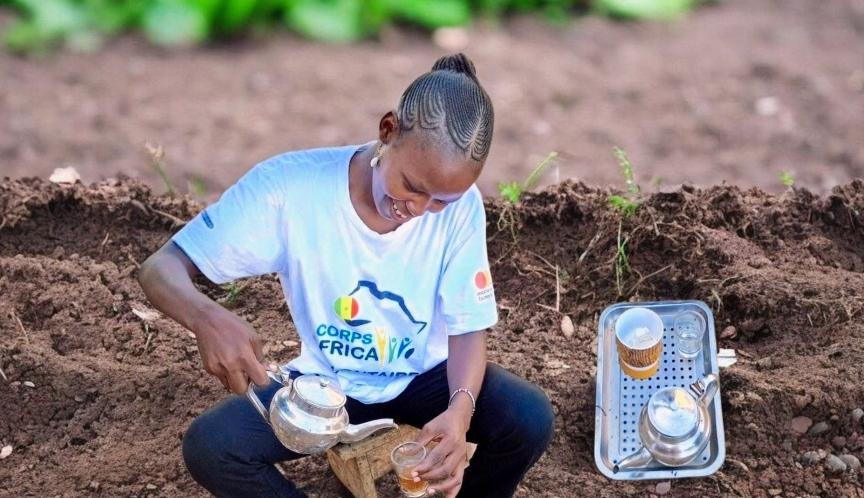
The Attaya Marathon Begins
In Kenya, “Let’s have tea” is a quick ten-minute affair. In Senegal, tea is not just a drink; it’s a lifestyle, a commitment, and honestly, a full-time occupation.
The first time I experienced attaya, I thought I’d accidentally joined a tea marathon. It was right after lunch, the sun blazing, when someone casually said, “Let’s make attaya.” Perfect, I thought: something cold, something refreshing.
A few minutes later, I stare at a tiny metal kettle, steam swirling, the scent of mint and sugar thick enough to taste. It’s hot. Scalding. Sweet. Every assumption I’ve ever had about tea starts melting away.
There we are, in the hottest part of the day, brewing tea over a charcoal stove with a proud little metal kettle called a barada. I’m sweating, the tea’s boiling, and the air smells like sweet mint and sugar—an obscene amount of sugar. I start wondering if half of Senegal’s economy revolves around attaya.
In my host community, attaya is not a treat; it’s a routine. After breakfast, after lunch, after dinner… but mostly when the sun feels like it’s trying to melt your skin. Why we drink steaming hot tea when the air itself feels like fire, I still don’t know. And the two-glass serving tradition? Another mystery. I’ve learned it’s better to just sip, smile, and go with the flow.
The Three Rounds of Life
Finally, the first round is served in tiny, half-filled glasses. Two sips, maybe three if you’re polite, and your glass is already whisked away to be refilled. I think, “Wow, that was cute.” Then comes another. And another. It’s like a human tea conveyor belt. By the time your glass returns, the next round is already brewing.
The first round is bitter, strong enough to make you sit up straight. The second is sweeter, warming the heart and loosening the conversation. The third is almost syrupy, leaving that pleasant stickiness on your tongue and a slow, dreamy calm. They say the rounds represent life: the first bitter like life itself, the second sweet like love, the third soft like death. I say it represents tea addiction, but a beautiful one.
Therapy in tiny glasses….
What I’ve come to love most about attaya is not the tea itself. It’s the pause. It slows everything down. Nobody’s rushing. We talk, laugh, tease, debate football, gossip about neighbors, all while pretending to help make the tea. Mostly, one person does the work while the rest of us supervise with great enthusiasm.
By the third glass, the world feels softer, the sun less aggressive. Suddenly, you get it; why attaya matters here. It’s not just tea. It’s therapy served in small glasses, on repeat. A reminder that life, like tea, is best shared slowly, sweetly, and with a little laughter along the way.
What unique cultural traditions have you experienced that forced you to slow down? Share your own stories in the comments below!