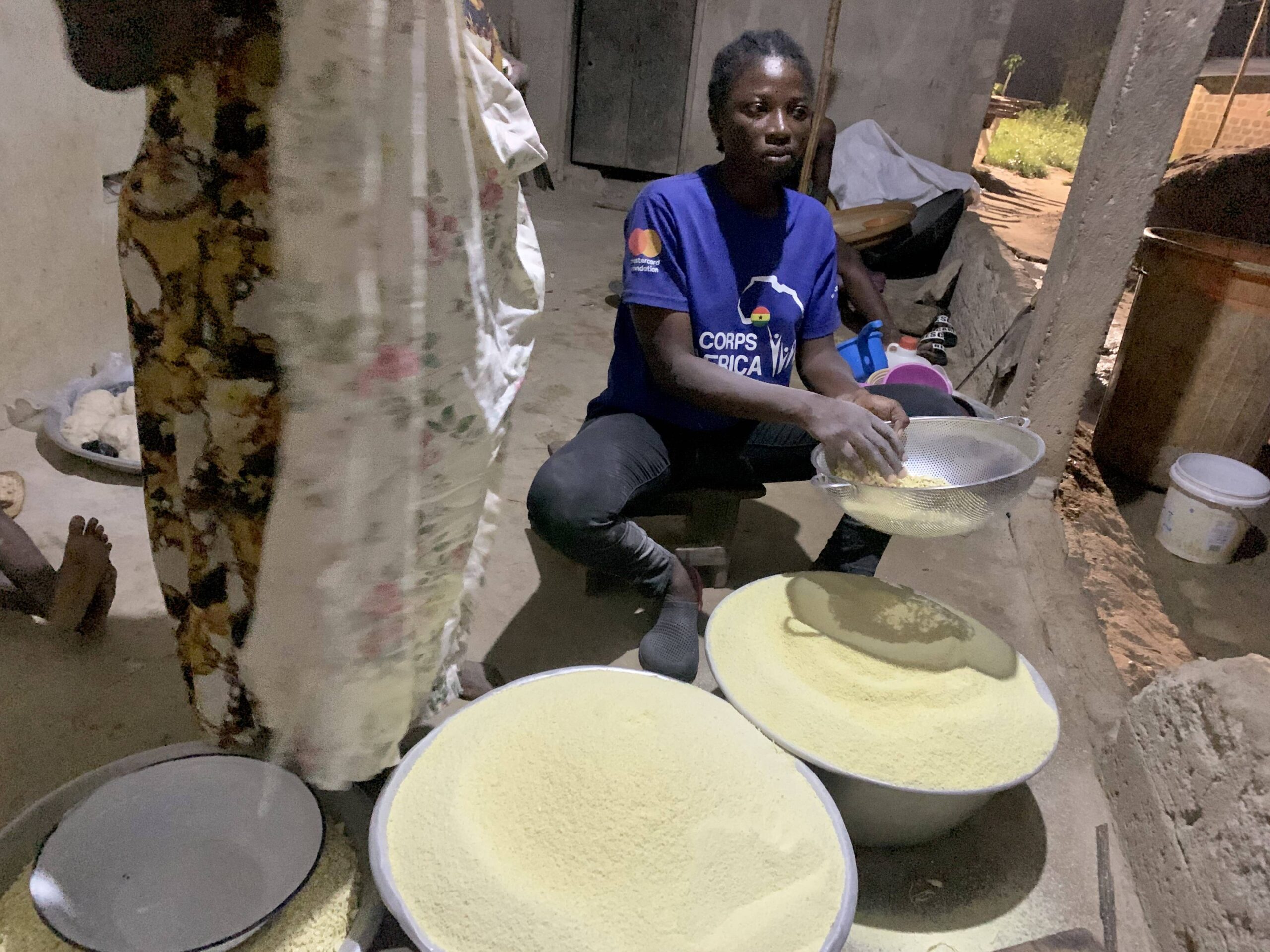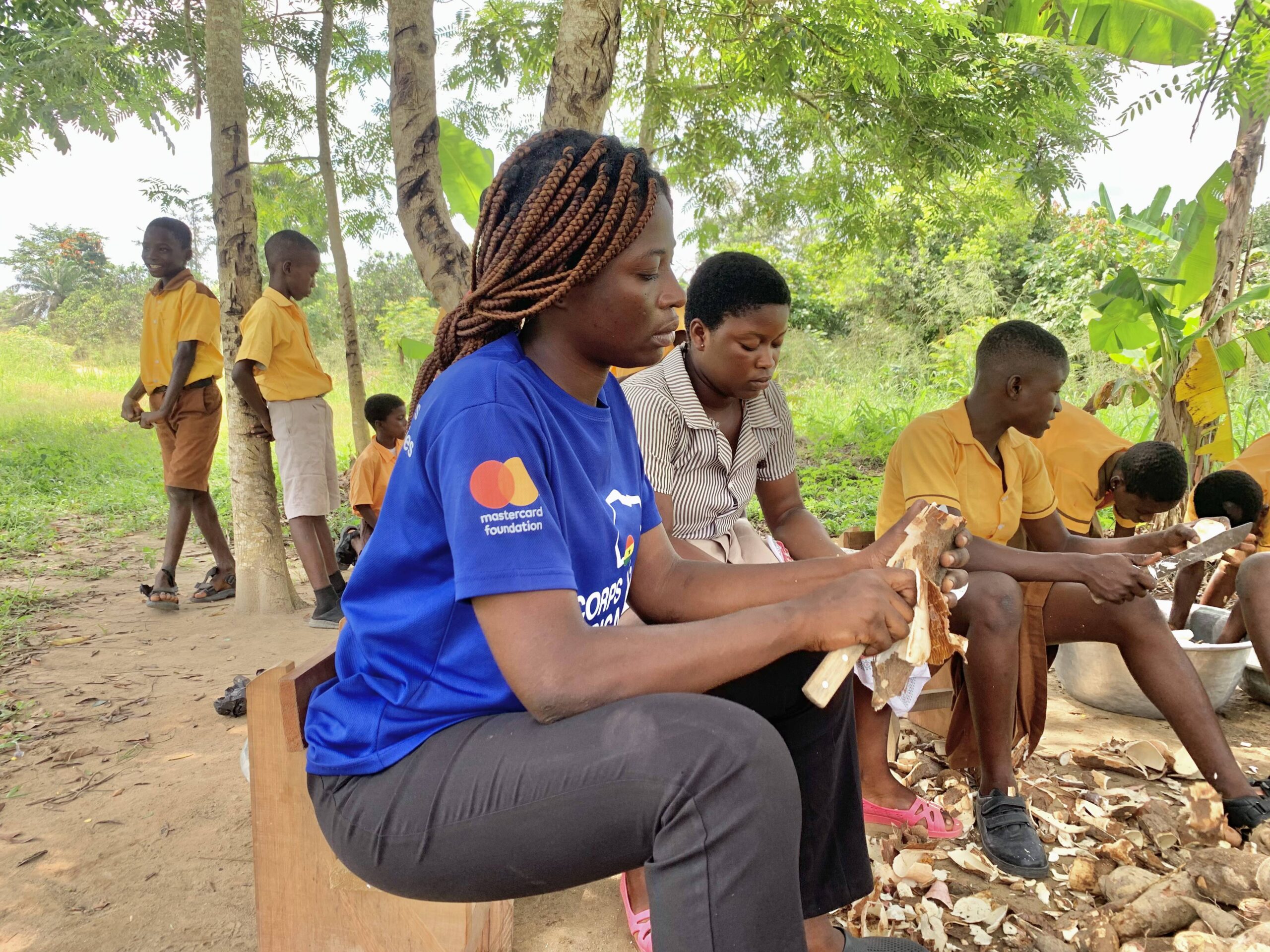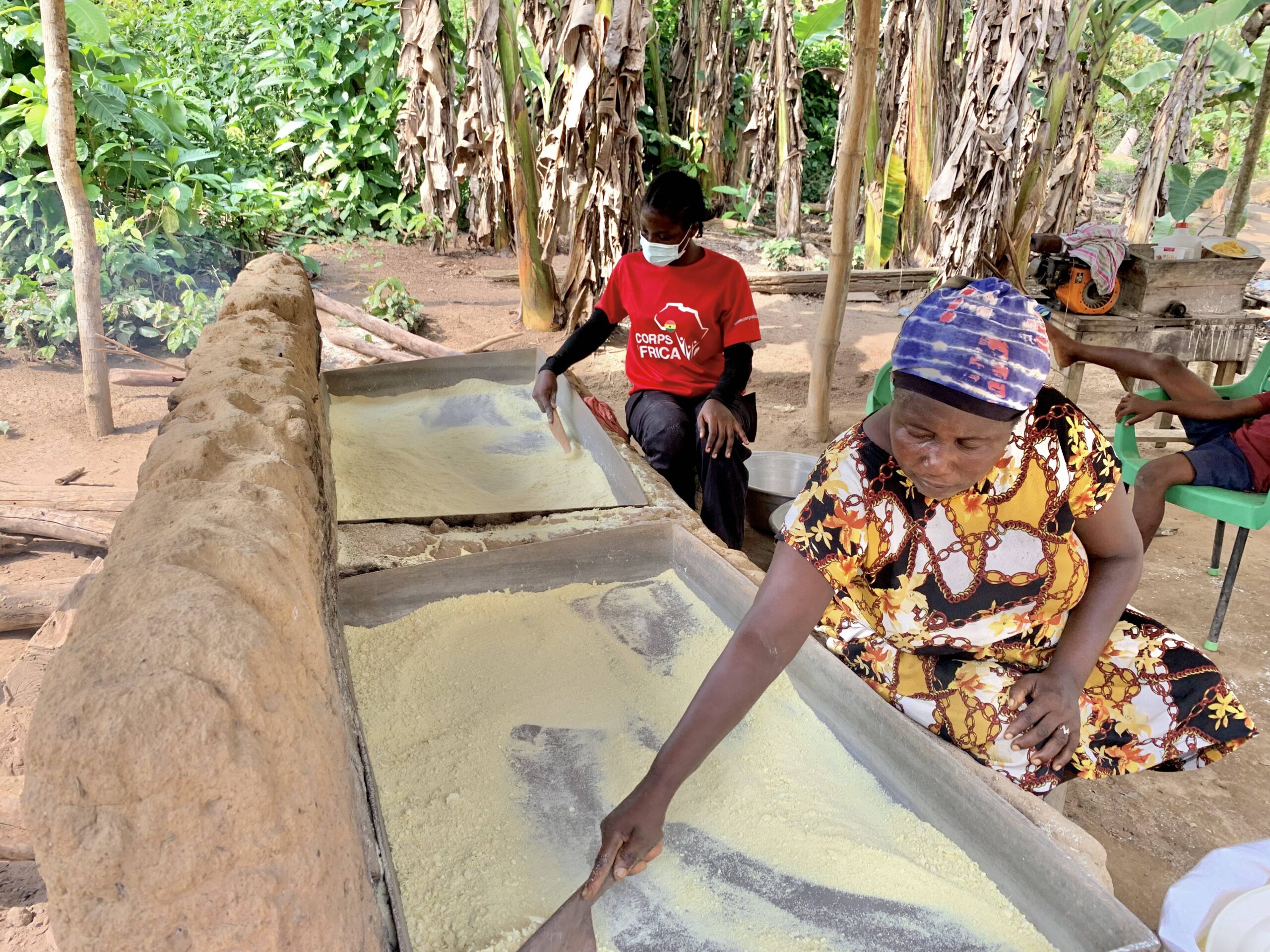
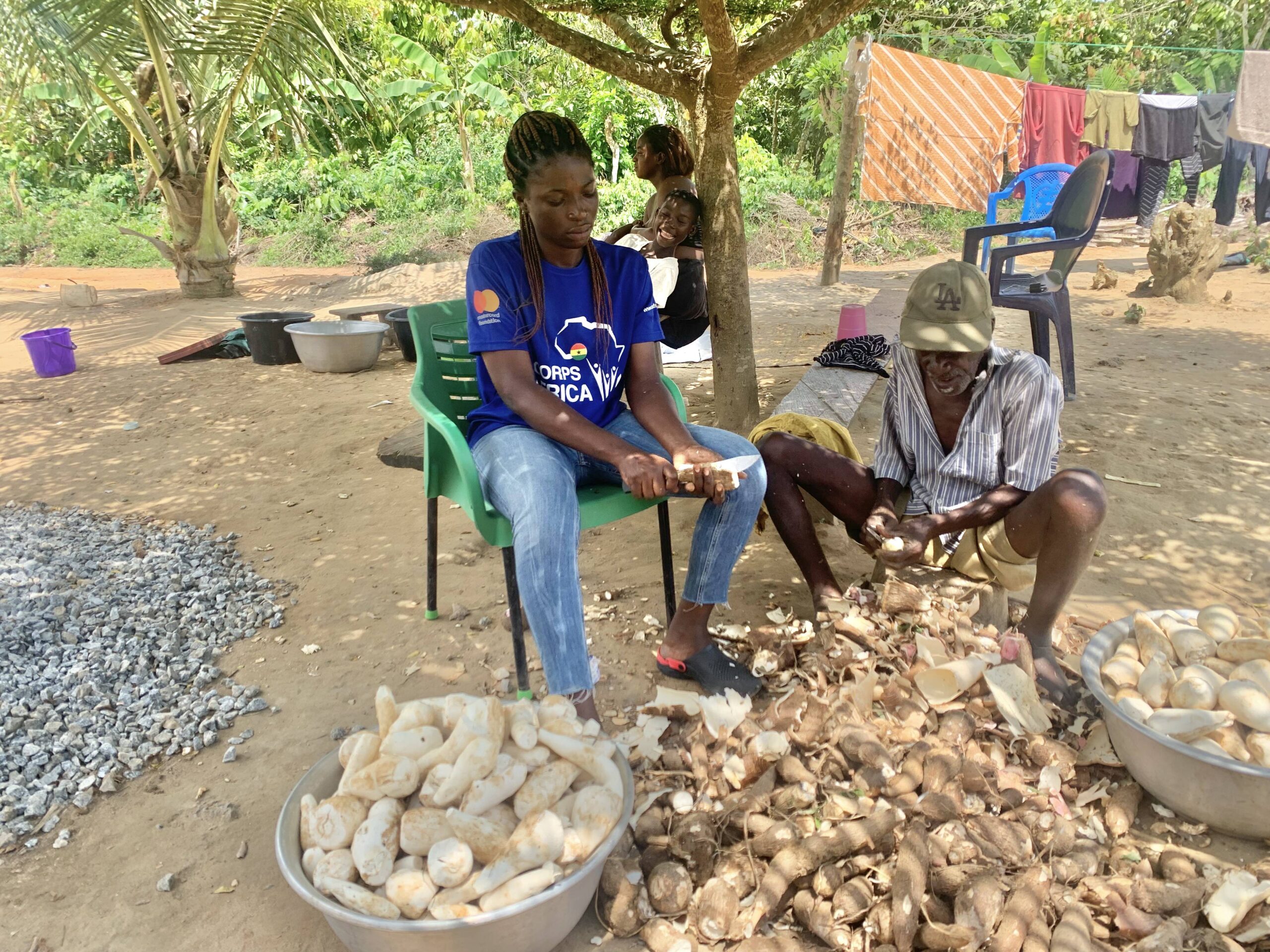
If you passed through Senior High School (SHS) in Ghana, chances are gari saved you at some point. Gari soakings after prep, late nights with textbooks, or days when “food money” finished too early. For many of us, gari is simple, fast, and familiar. But in Kojokrom, gari is not simple at all.
This month, I have spent time learning how gari is made in my community, and it has completely changed how I see this everyday food. Kojokrom is largely a cassava farming community, and from November to January, gari processing becomes very active. These months matter. Families process gari to earn money for Christmas, school needs, travel, and daily survival.
I had never visited a gari processing site in my life until I came here. The process is long and demanding. Cassava is uprooted, peeled, washed, and taken to the mill. It is then packed into sacks and left to drain for two to three days. After that, it is milled again before frying begins. The frying itself is intense. Sitting close to the fire for hours, stirring continuously, feeling the heat even when you are not directly in the flames.
Watching community members work reminded me that gari is not just food. It is sweat, patience, and planning. People do this knowing that prices can drop when everyone harvests at the same time, yet they persist. Some process large quantities from morning till evening, focused on providing for their families.
What struck me most was the intention behind it all. Gari is not processed randomly. It is timed carefully with seasons, sunlight, and market demand. It is a livelihood strategy shaped by experience and resilience.
As I learn from the people here, I am beginning to appreciate how much knowledge already exists within the community. These are not just farmers. They are processors, planners, and problem solvers.
Today, when I see gari, I no longer see only convenience. I see the fire, the long hours, the calloused hands, and the determination to prepare for tomorrow. Have you ever watched gari being made from start to finish? Is the process the same in your community, or is it done differently? And when was the last time you paused to think about the story behind the food on your plate? Behind every grain of gari, there is a story worth telling.