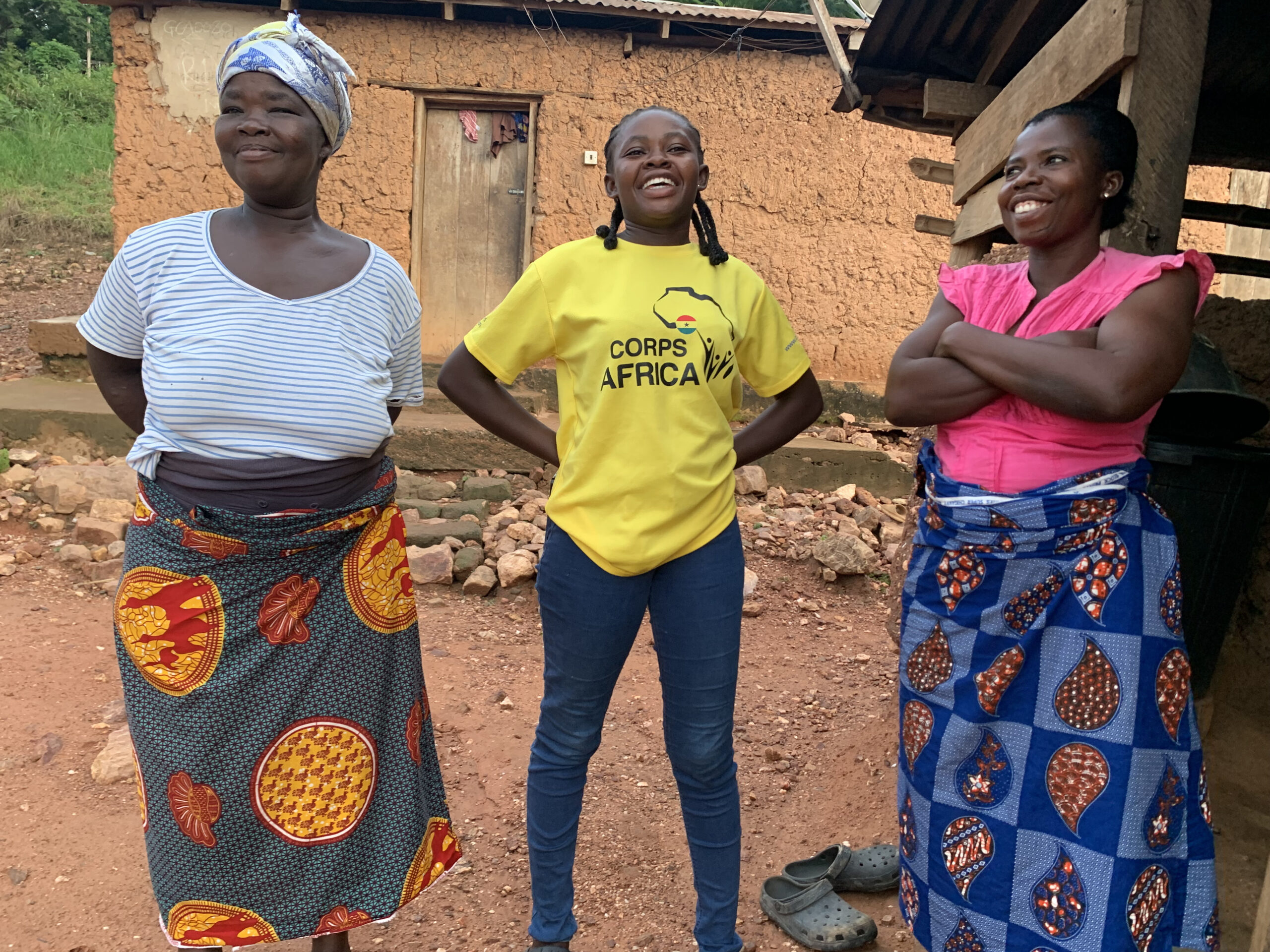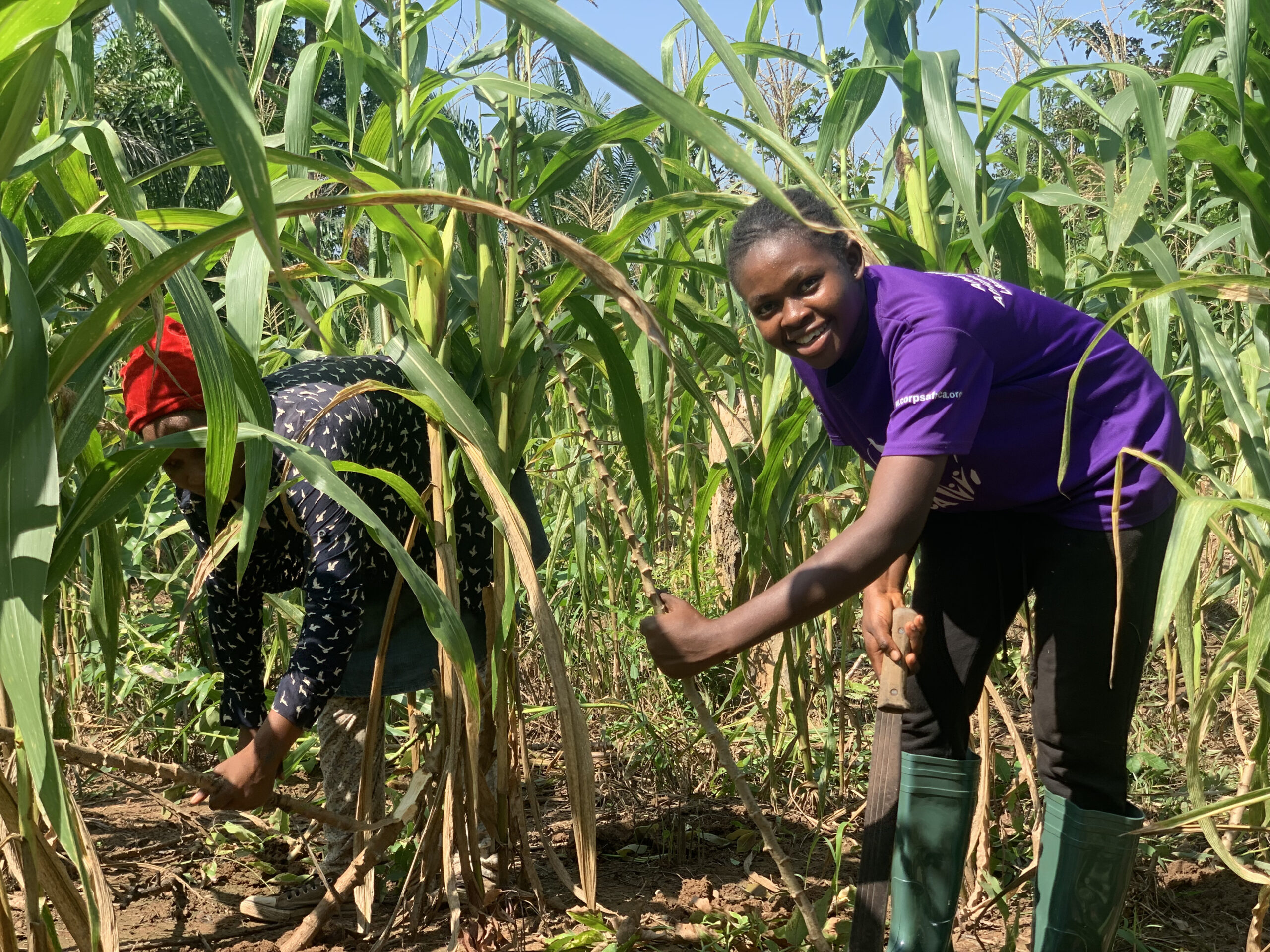

You can know all the CorpsAfrica development approaches; ABCD, HCD, CLD, but without effective facilitation, none of them will truly work. Knowledge alone isn’t enough; how you guide people through the process is what brings results.
Papa Ray (our Training Manager) often says that beyond the presence of a volunteer, one of the greatest gifts CorpsAfrica offers any community is mindset change. And that shift happens through the very approaches we use. As volunteers, our real work begins when community members start to understand why we do things the way we do, and why their participation matters.
In my community, dependence on outside support is common; something many local communities struggle with. Helping people move from dependency to self-reliance is a challenge. For a community that has received and continues to receive aid from various organizations, it’s almost instinctual to see an NGO and immediately request help: money for a business, a new school building, a toilet, and so on.
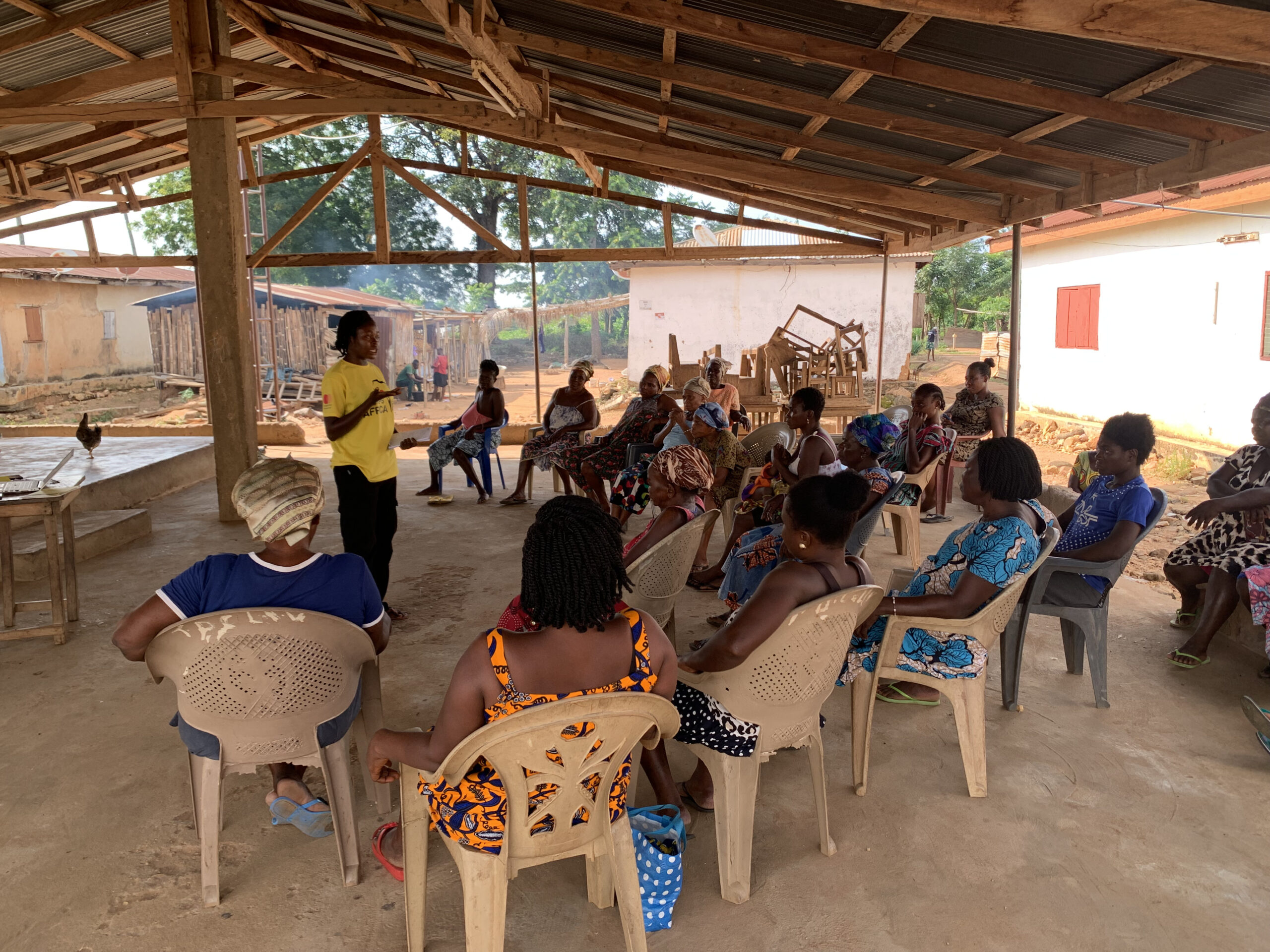
But CorpsAfrica doesn’t do projects for people. We empower them to make their own decisions while we facilitate the process. So when these requests kept coming, even after I had explained our approach to the whole community, I realized something important: they still didn’t understand.
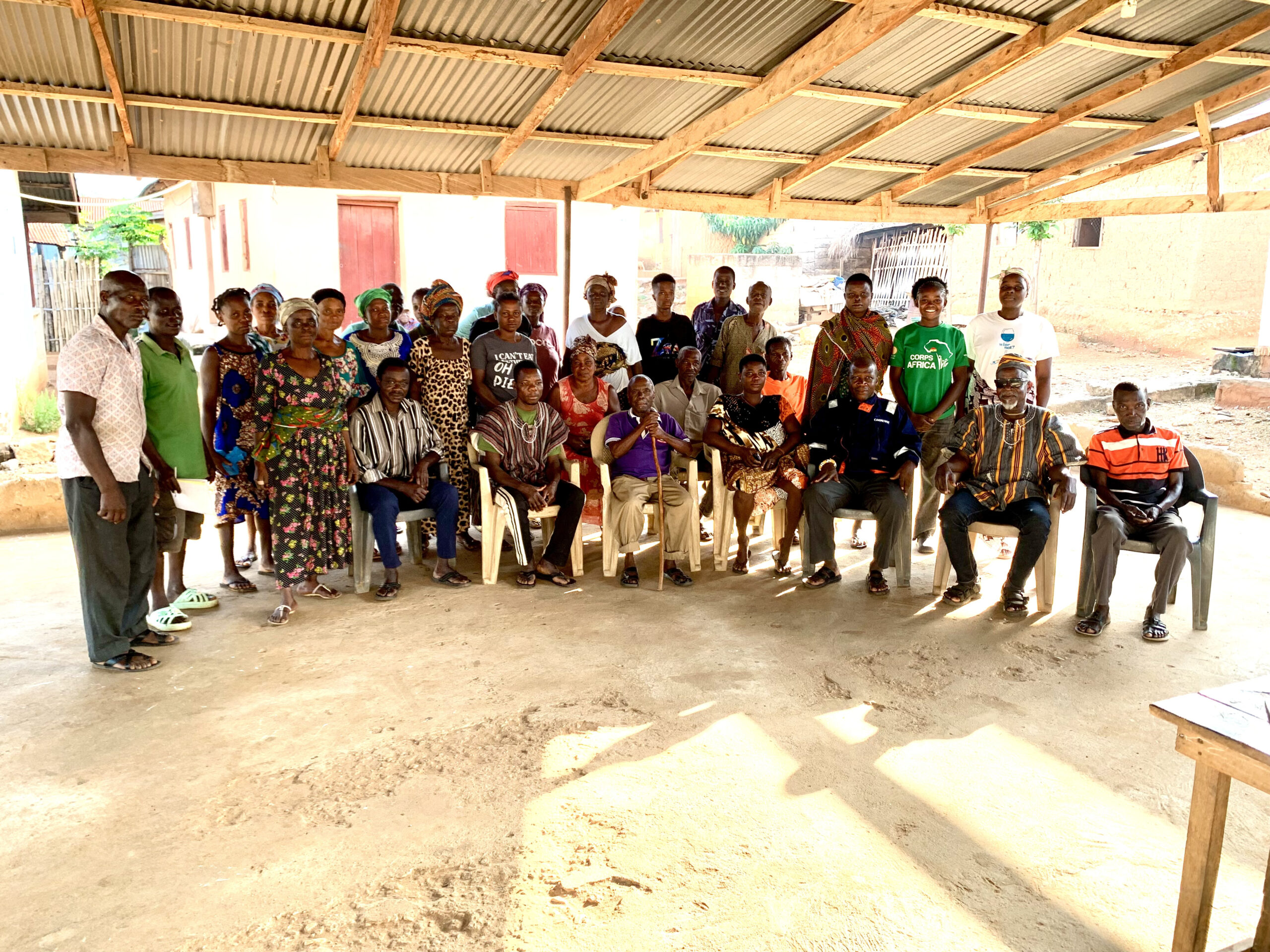
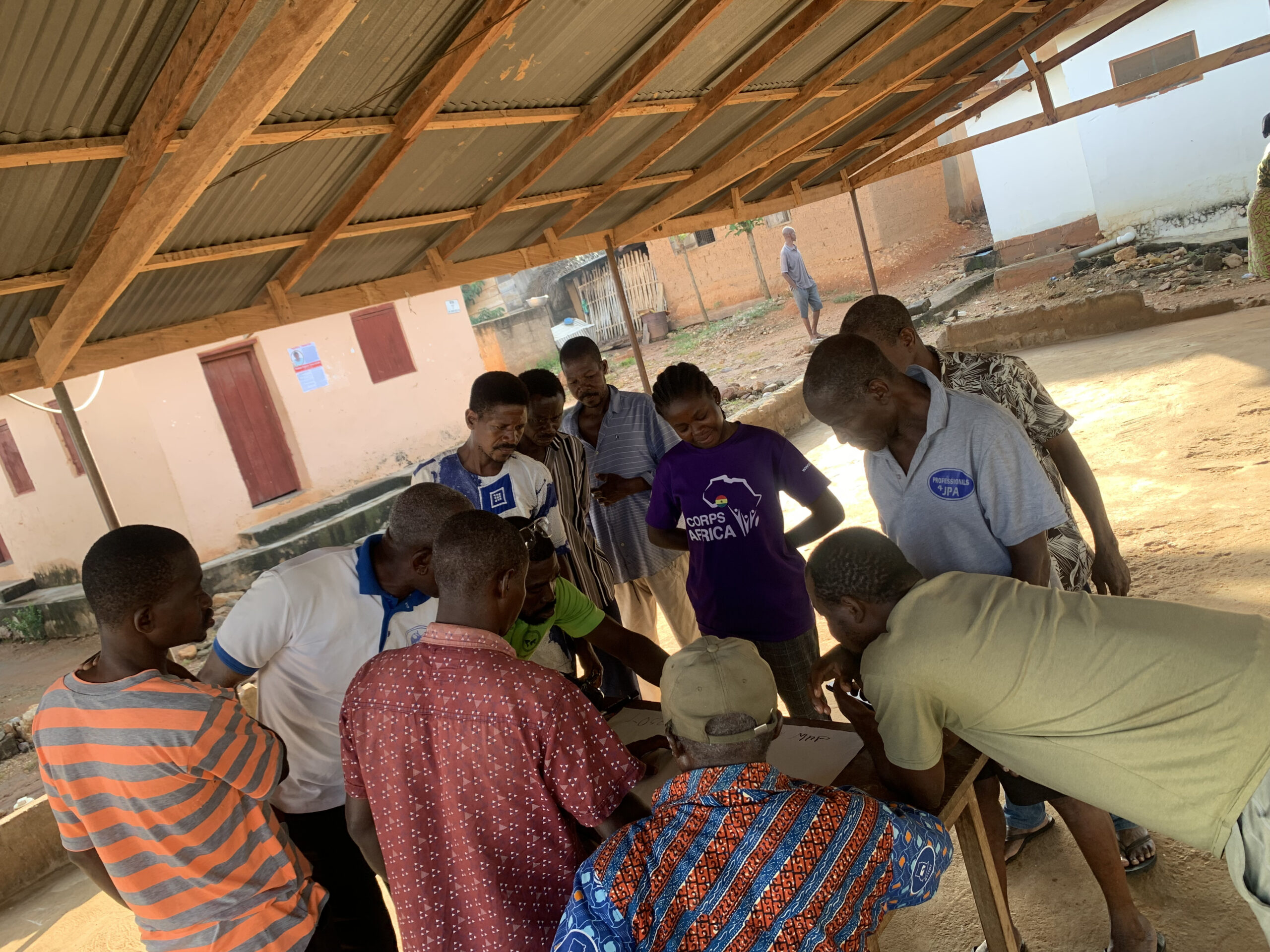
And honestly, I became worried. If I had already explained it three times, what exactly was I not doing right? Then one day, something shifted. I decided to meet with a smaller group, just a few community members. I brought along their community map, highlighting all their assets. We revisited the CorpsAfrica approach, and then I asked them:
“Looking at this map and everything your community has, what do you think we can build on?”
And that was the turning point that impacted my entire journey. They began discussing their strengths, their daily activities, and how they could build on what was already working. The ideas they shared were brilliant, creative, practical, and rooted in their reality.
In that moment, I was reminded that communities truly do hold the solutions to their own challenges; sometimes they just need a little support to see it.
I encouraged them to share what they had learned with others and start thinking more deeply about their primary project. It’s a small step, but it’s progress. Watching mindset shifts take place, no matter how slowly, is what matters most to me.
It can be frustrating when people don’t immediately grasp these approaches. But that frustration is also an invitation for reflection. Ask yourself: What else can I try? What might work better for this community?
When you stay open to adapting, you eventually find the approach that resonates, and that’s when real change begins.