When I first arrived in Malawi as a CorpsAfrica Exchange Volunteer, I knew this would be more than just another year of service. It was going to test my adaptability, openness, and willingness to learn. Coming from Ghana, I thought I understood what integration meant. But Malawi taught me that true integration is not about grand gestures. It’s about the little things that are often overlooked.
The first few weeks were the most challenging. The language barrier hit me hard. I would listen to conversations in Tumbuka and pick up only fragments. Did I say fragments ? Well I think I meant to say sounds. I tried to repeat what I heard, often to the amusement of those around me. Yet, every laugh was gentle and encouraging, never mocking. These small exchanges became my first lessons in humility and connection.
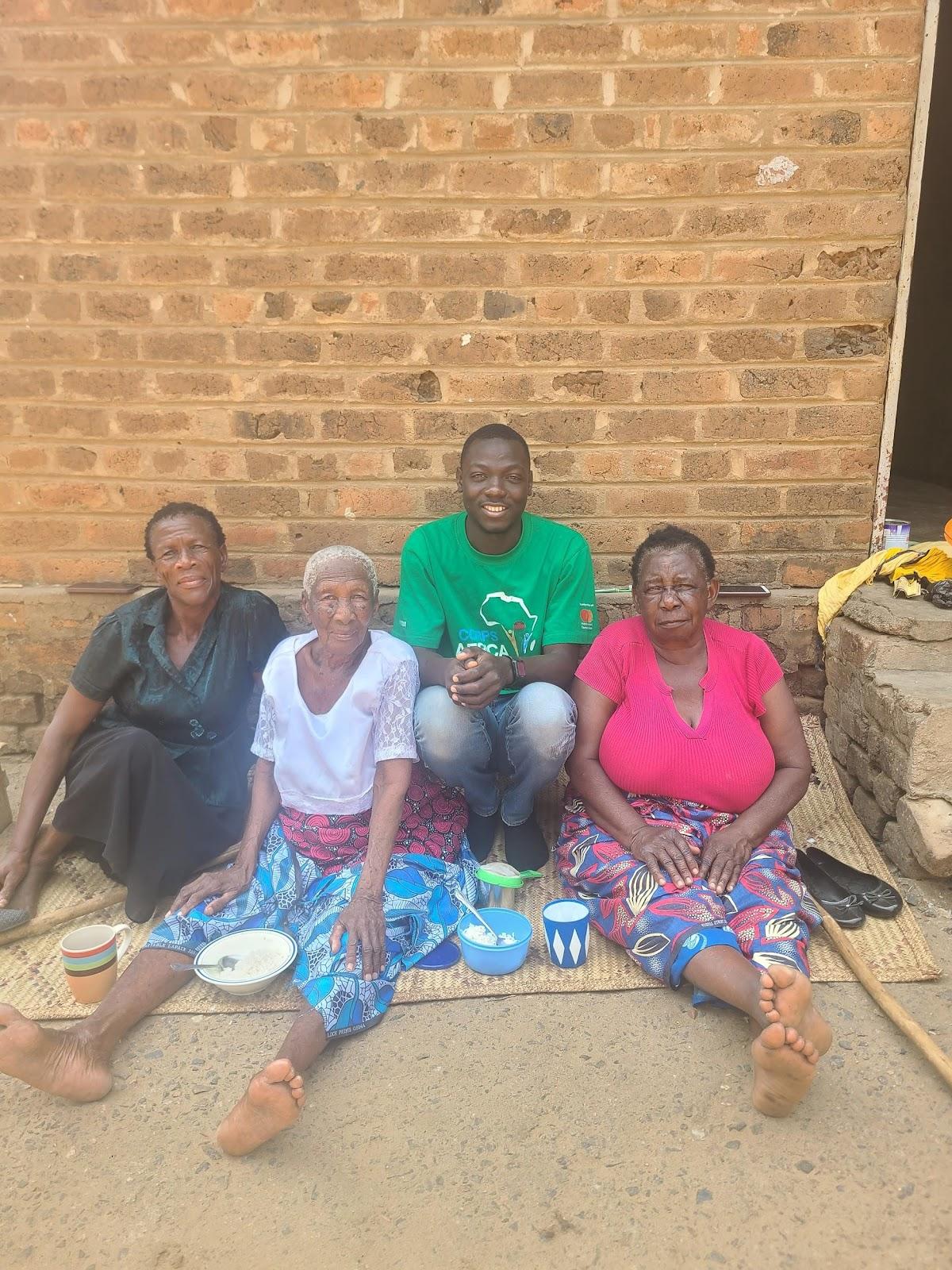
But what truly changed everything for me were the small, everyday acts of kindness. Children calling out my name as I walked to the market, neighbors greeting me with “Mwawuka?” and patiently teaching me how to respond, well I already learnt how to respond to greetings but they wanted me to sound like them, women inviting me to sit with them as they peeled and pounded Mayawo (Cassava) or prepared meals. These were the things that made the unfamiliar feel familiar.
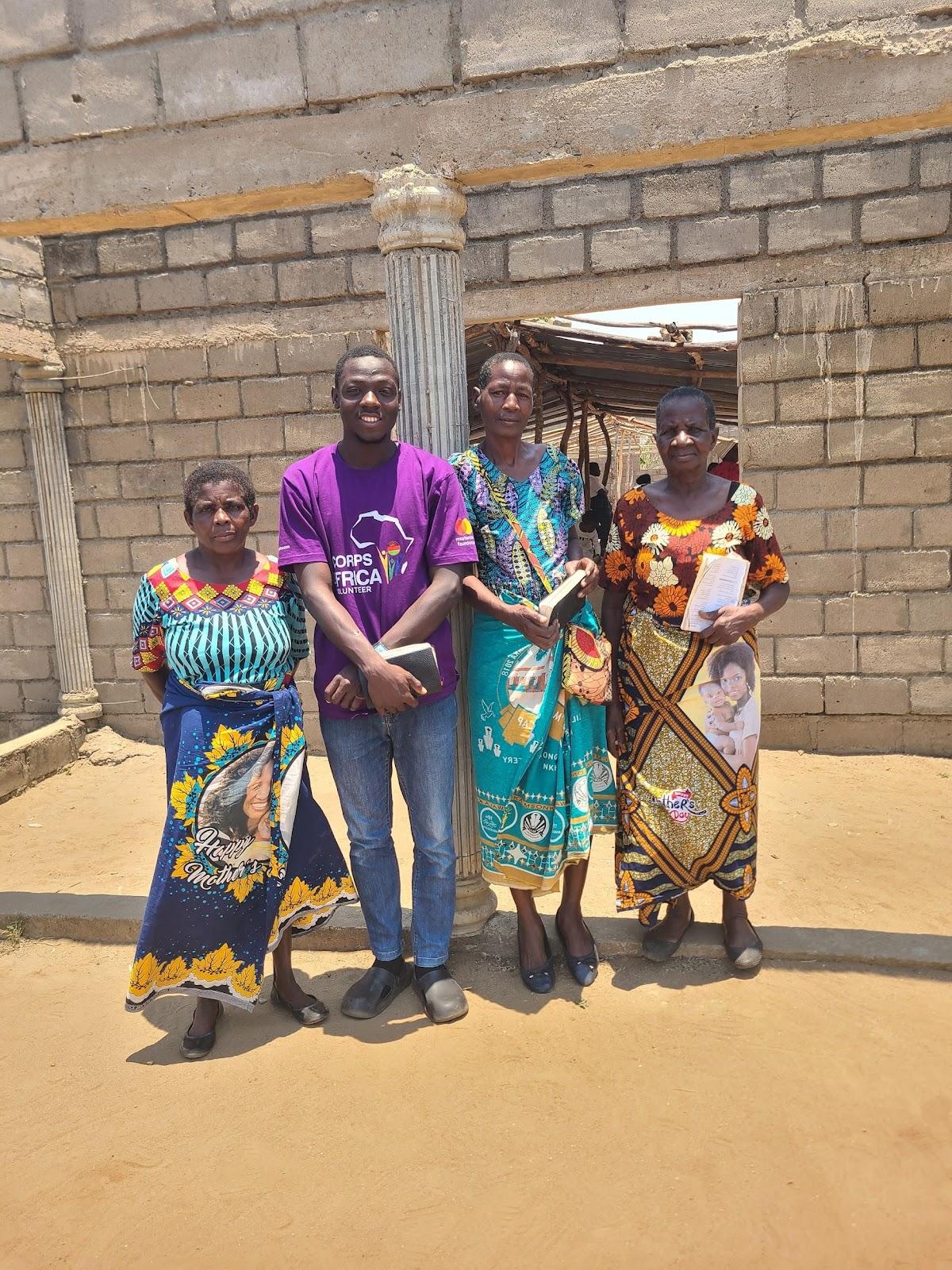
One of the most profound experiences came from attending church services. As a Muslim, this might sound unusual, but I saw it as an opportunity to understand and connect. The first Sunday I attended, the congregation welcomed me with open arms. I remember one elder saying, “You are our brother, and God’s house is open to all.” That statement stayed with me. It reminded me that faith, at its core, unites rather than divides. I attended other churches after that, not out of religious obligation, but to experience community. It was also a way of learning the language and connecting with new people. Each time a phrase or word is used in the church frequently, I try to understand what it means and begin using it. Sometimes out of context but I will still use it. Each visit deepened my appreciation for Malawi’s warmth and inclusiveness.
In Ghana, I had experienced a similar sense of belonging when I worked with children during my service as a CorpsAfrica Volunteer. Teaching them and seeing them proudly introduce me to their families created a deep bond. In Malawi, the churches became that bridge. Through them, I met local leaders, and families who made sure I never felt alone.
Sometimes, integration is portrayed as a big achievement, but I’ve learned it’s built through quiet, consistent actions,showing up, listening, and allowing yourself to be vulnerable. Whether it’s sharing a plate of nsima, joining a community gathering, or simply greeting someone in their language, those gestures speak louder than any speech or project. The most popular question I get in the community is always, “so how do you communicate with the people?”. I can spend more than an hour with people who don’t speak English and only God knows how we communicate. It’s just my way of showing to the people that I am trying to be like them. And somehow, it seems to be working.
Now, when I look back, I realise that the beauty of this journey lies not in how different Ghana and Malawi are, but in how similar the hearts of their people can be. The little things, the greetings, the laughter, the patience have become the foundation of my experience. They have taught me that service is not only about changing communities but about being changed by them.
As I continue my work here, I carry one truth with me that a meaningful integration is not found in the big moments but in the small, genuine human connections that remind us we all belong somewhere, sometimes, in places we least expect.