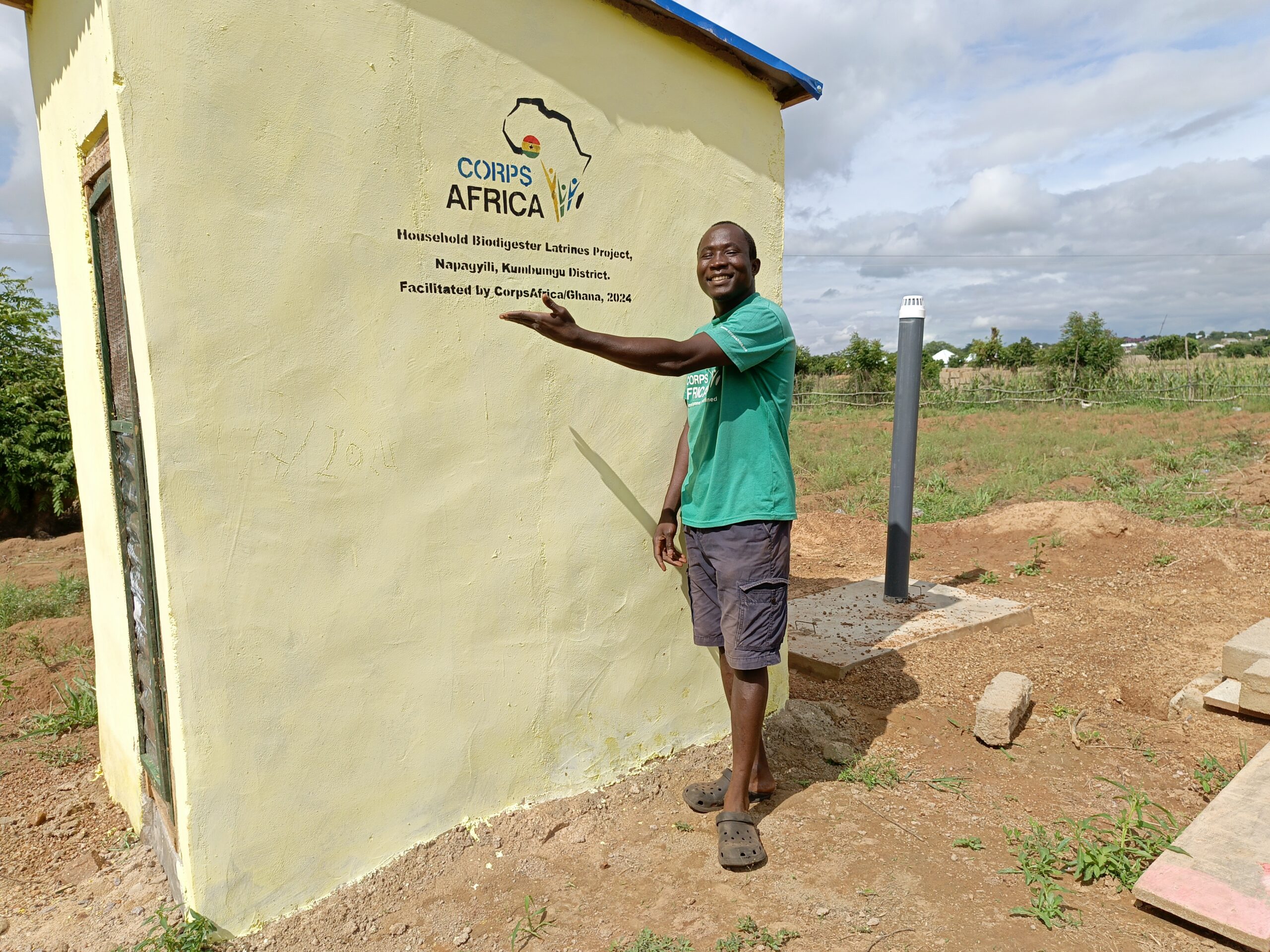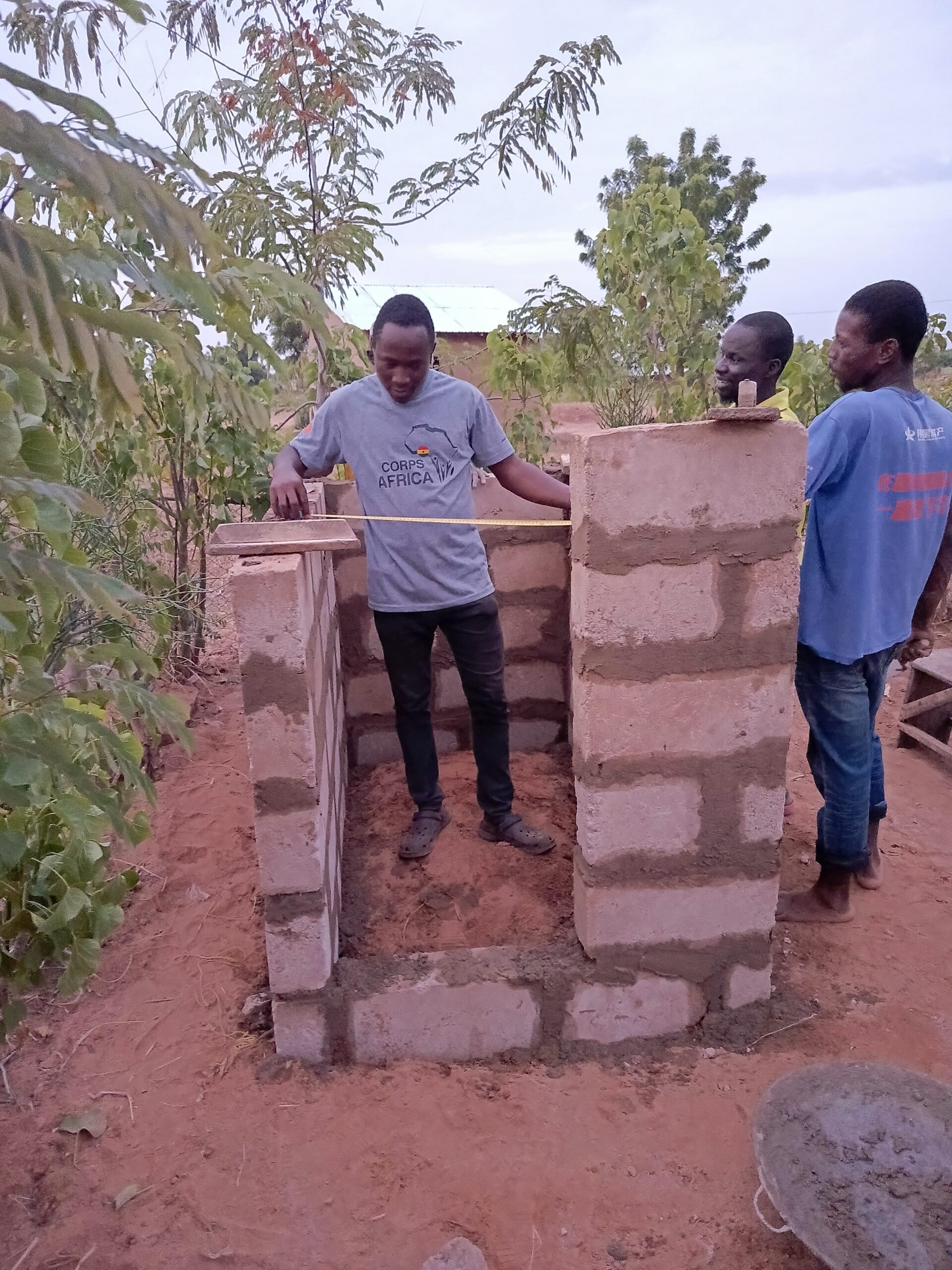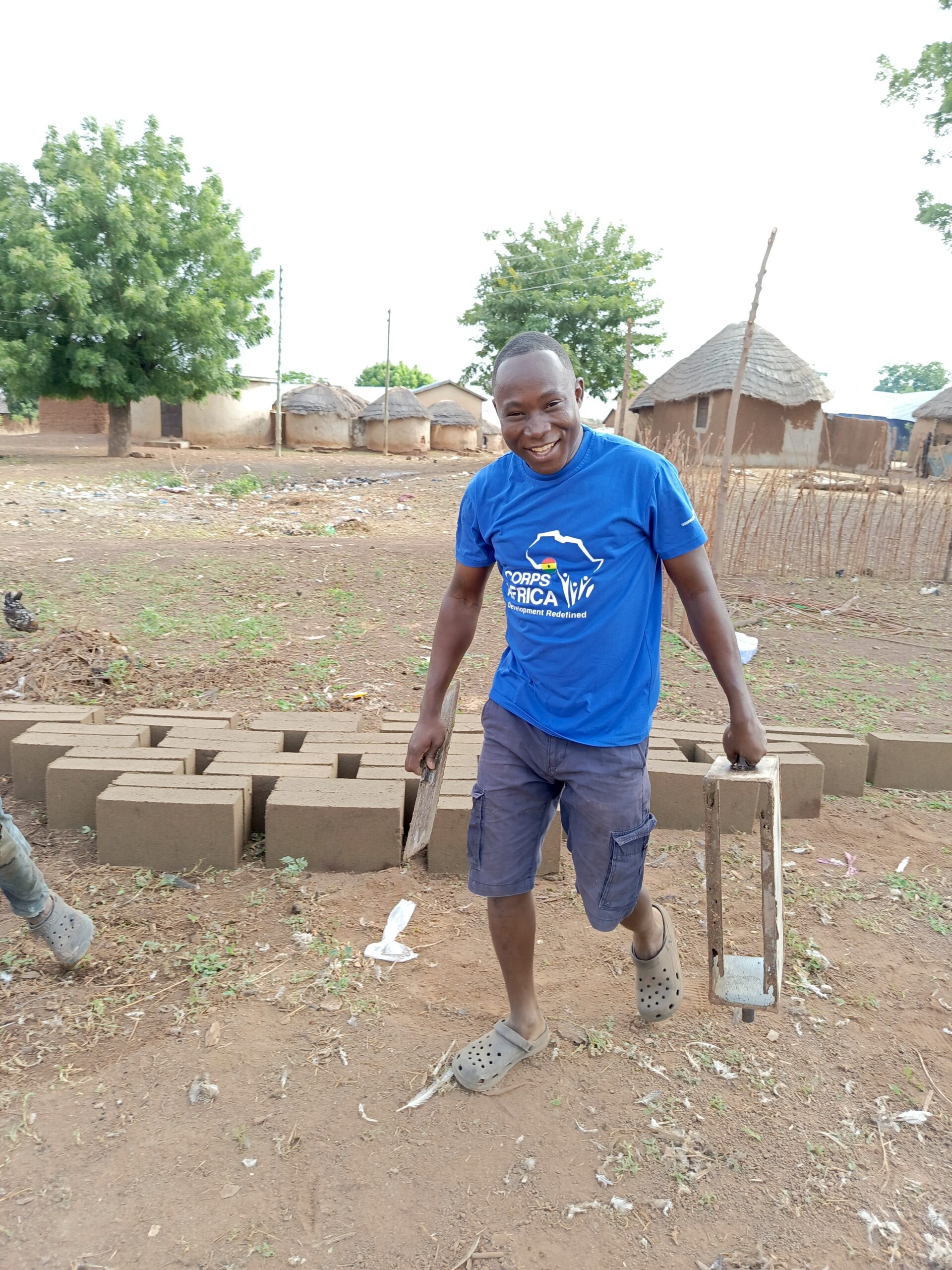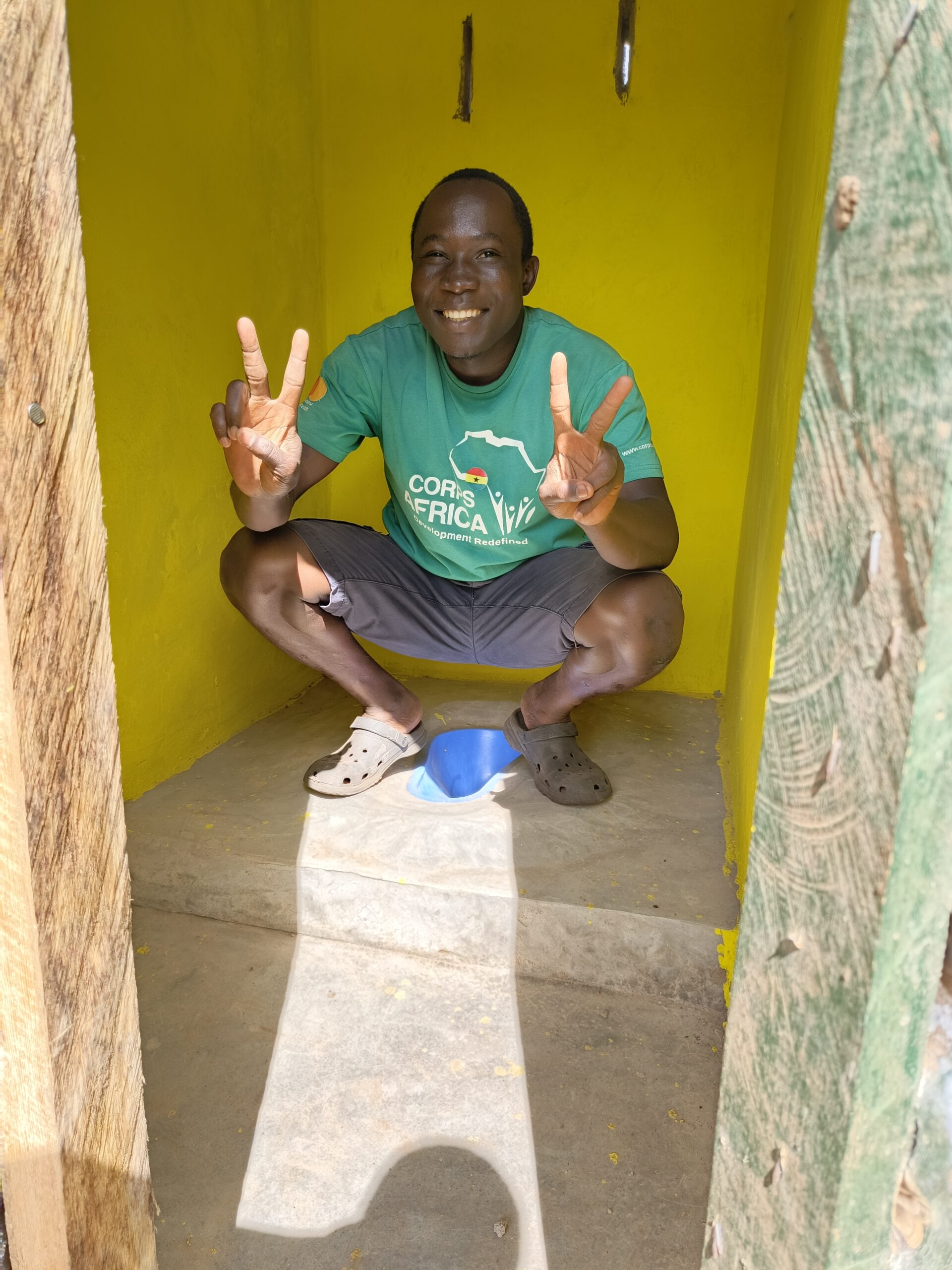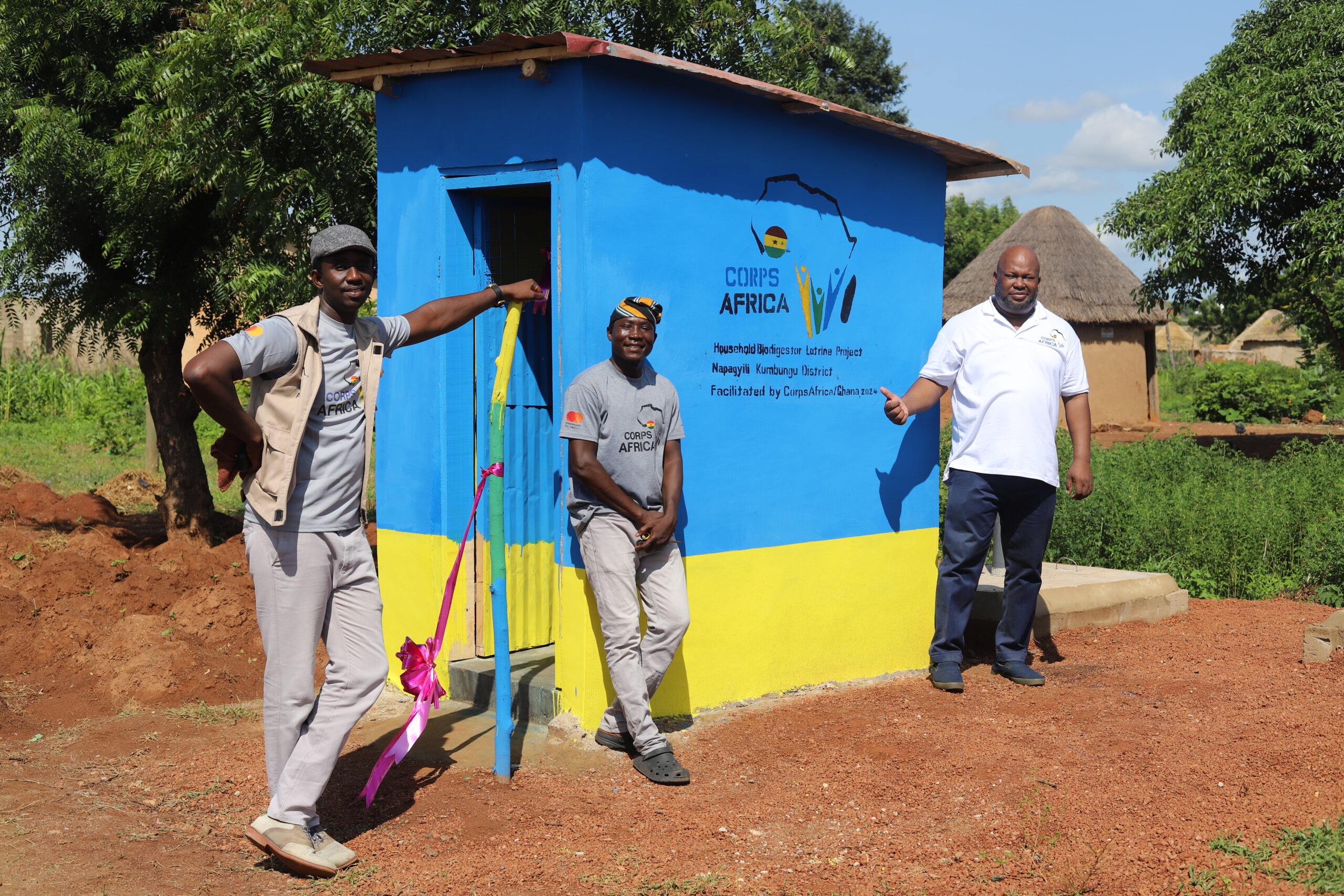
In Napagyili, a farming community of 1,784 people across 228 households, open defecation had long been the only option. With no formal sanitation facilities, residents relied on nearby bush and open fields, a practice that compromised health, safety, dignity, and overall well-being. During the rainy season, contamination spread quickly, increasing the prevalence of diseases such as cholera, typhoid, and worm infestations. The lack of privacy also created daily discomfort and embarrassment for men, women, and children alike.
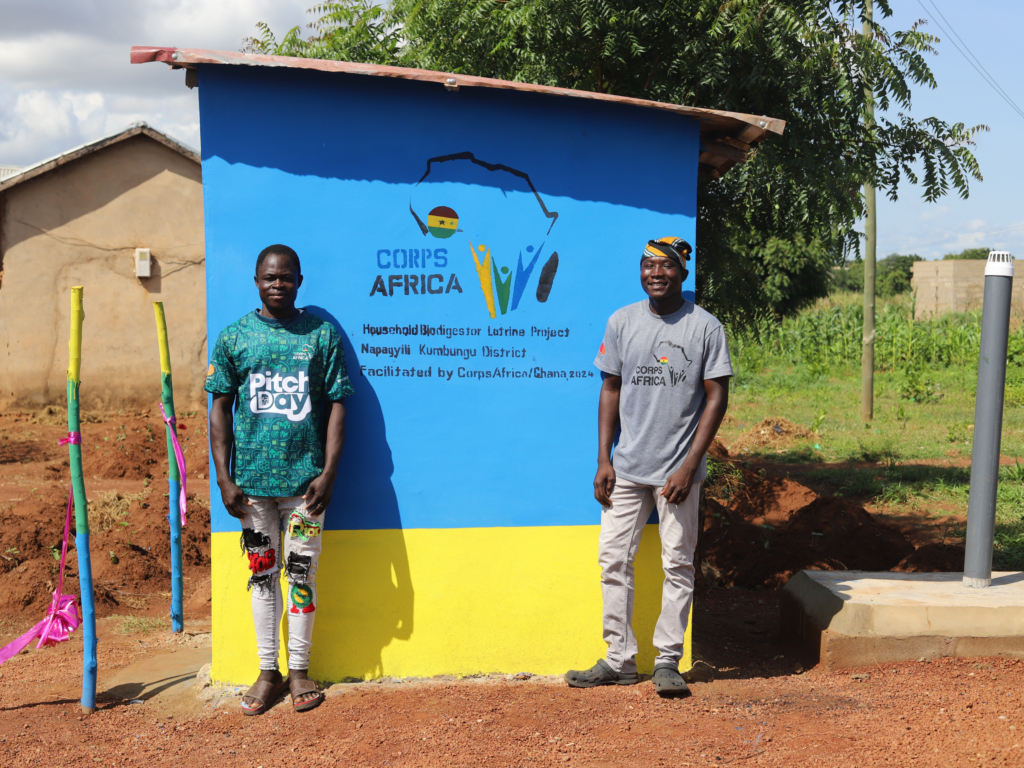
To address these urgent challenges and advance Sustainable Development Goal 6 (Clean Water and Sanitation), community members, supported by Stephen, a CorpsAfrica/Ghana Volunteer, undertook a transformative sanitation project: the construction of 20 household biodigester latrines.
Biodigester latrines were chosen for their long-term sustainability and efficiency. These systems break down waste safely, eliminate foul odors, reduce the presence of flies, and require less frequent emptying—making them both cost-effective and environmentally responsible. By offering a clean, private, and durable solution, the community restored dignity and greatly improved daily living conditions.
This project now provides safe and private sanitation for more than 400 residents, marking a major step toward improved public health and enhanced quality of life. Beyond the households directly served, an additional 198 community members benefit indirectly through reduced environmental contamination and improved overall hygiene.
Napagyili’s success is part of a broader movement. Across the region, CorpsAfrica Volunteers are leading similar community-driven initiatives that promote sustainable sanitation, strengthen public health, and create lasting, locally owned change.
Key Impacts
Improved Health: Reduced the spread of communicable diseases, such as cholera, typhoid, and worm infestations, particularly during the rainy season.
Restored Dignity and Safety: Provided private, secure sanitation facilities, replacing the risks and discomfort of open defecation.
Sustainable Waste Management: Introduced biodigester technology that minimizes odors, reduces maintenance costs, and supports long-term environmental hygiene.
Broader Community Benefits: While 20 households received new latrines, nearly 200 additional residents experienced indirect improvements in health and sanitation across the community.
CorpsAfrica addresses two of Africa’s most difficult challenges: engaging youth and helping rural communities overcome extreme poverty. We recruit and train motivated volunteers to live and work in rural, under-resourced areas in their own countries. They collaborate with the community to design and implement small-scale projects that address their top priorities and, by doing so, gain the skills and experience that lay the foundation for personal and professional success.
CorpsAfrica trusts youth and communities to help each other.