They say you should never have any expectations when heading to your site of deployment. I told everyone I didn’t. I repeated it like a mantra. But if I’m being completely honest with myself, deep down, I expected a lot.
My journey here began with a wave of fear, crashing into me the moment I stepped off the van. The first thing that greeted me wasn’t a person, but the weather. It was intensely, overwhelmingly hot. A scorching warmth that felt like a physical wall. At that moment, surrounded by unfamiliar air, I was nervous. I was scared.
And soon after, I had to admit another truth: my hidden expectations were not being met. The reality was different from the picture I had painted in my mind. It was a humbling and difficult way to start.
But then, I met the people.
The very same warmth I felt in the air was mirrored in the hearts of the people of Tharaka. They have been incredibly nice, so welcoming, and so generous. They love visitors here, and that love is active and tangible.
My days are spent on door-to-door integration visits. And at almost every home, a familiar, good-natured question pops up: “Umetuletea nini?”, “Utatupea nini?” At first, this made me nervous. Our approach is to teach people how to use what they already have, to leverage their local resources. We don’t come with handouts. Explaining this felt delicate.
But I learned that the question isn’t just about material things; it’s an opening, an invitation to connect. And so, we sit. We talk. We listen.
Some of the most powerful moments haven’t been filled with words at all. I’ve sat with mothers—women who are tirelessly finding ways to feed their families, a struggle I understand perfectly—in a comfortable, understanding silence. Just looking at each other, sharing space. A heart-to-heart conversation without a single syllable.
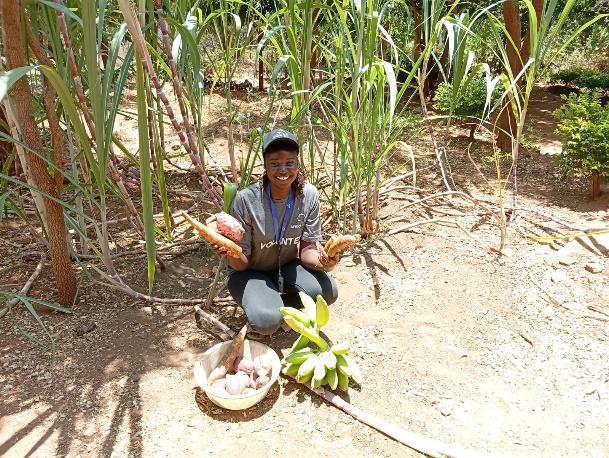
Then there is the generosity. Because they love visitors, they love to gift them. I’ll leave my house early in the morning for my rounds and return laden with foodstuffs. My arms are full with sugarcane, potatoes, maize, and beans. Sometimes I look at it all and wonder, “Who is going to eat all this?” But that’s not the point. The point is the love with which it was given. This generosity motivates me. It fuels my desire to keep working with them, to keep listening.
It has truly become a home away from home. They’ve even started joking about making my stay permanent. “You know you’re never going back to Western Kenya,” they tease with wide smiles. “You’ll remain here. We must get you a husband around here!” It’s hilarious, and it makes me feel like family. Who knows? Maybe in God’s plan, a part of me will always remain here.
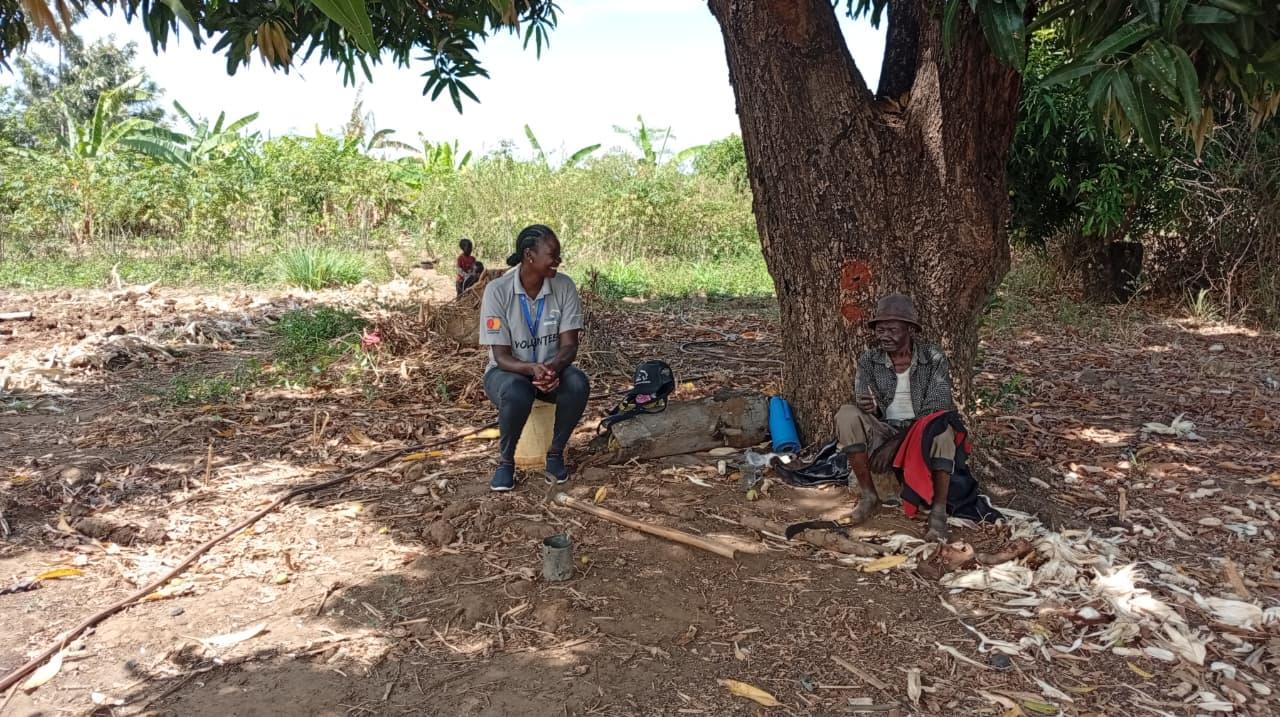
Then, there are the stories. The grandparents, the elders, are living libraries. They recount tales from their youth, how they used to do things, what life was like. They tell it with such a comical and emotional flair. The stories flow so beautifully. Sometimes, I don’t want to leave. I could sit and listen to them all day, lost in the past they bring so vividly to life.
So, here we are. My journey in Tharaka has been a whole rollercoaster. It’s been hard. It’s been tough. It’s been scary, great, and exciting, all at once. But I am here. I am learning. I am receiving far more than I could ever give. And I am still ready for whatever the future holds.