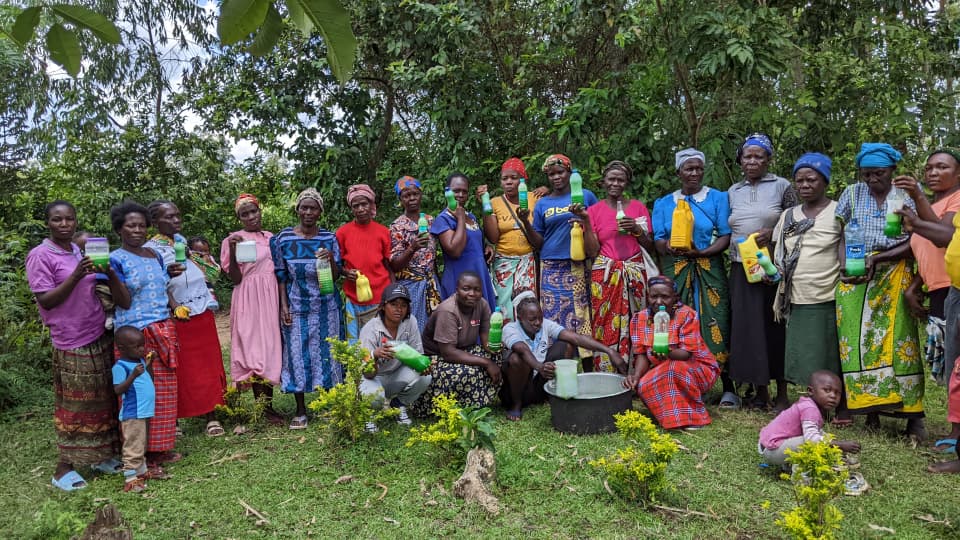
In Eburenga, located in Kakamega County, Western Kenya, a transformative community training initiative was conducted aimed at strengthening women’s economic empowerment through practical skills development. The session brought together 80 women for hands-on training in liquid soap making, a simple yet highly marketable enterprise with strong potential for income generation and improved household hygiene.
Purpose of the Training
The primary objective of the training was to equip women with practical entrepreneurship skills that can enable them to start or expand small-scale businesses. Liquid soap production was selected due to its affordability, ease of production using locally available materials, and high demand within households, schools, and small businesses.
Training Process and Participation
The training was highly participatory, ensuring that all 80 women were actively engaged throughout the learning process. Participants were guided through each step of production, including proper measurement of ingredients, mixing techniques, quality control, packaging considerations, and safety precautions.
Special emphasis was placed on understanding hygiene standards and cost-effective production methods, enabling participants to produce quality soap suitable for both domestic use and market sale.
Practical Output
At the end of the session, the group successfully produced 30 litres of liquid soap, demonstrating the effectiveness of the training and the participants’ ability to apply the skills learned. This practical output served as both a learning outcome and a motivation for participants to pursue production at the community level.
Impact and Community Value
Beyond technical skills, the training fostered teamwork, confidence, and entrepreneurship mindset among the participants. Many of the women expressed interest in forming small cooperative groups to continue production, reduce costs, and improve access to local markets.
The initiative is expected to have a ripple effect in Eburenga, as increased access to affordable liquid soap contributes to improved hygiene practices while simultaneously creating income-generating opportunities for households.
Conclusion
The liquid soap making training in Eburenga stands as a strong example of how practical skills development can drive community empowerment. By equipping 80 women with hands-on experience and producing 30 litres of liquid soap, the initiative has laid a foundation for sustainable livelihoods and strengthened economic resilience within the community of Kakamega County.