What if the very ground beneath our feet held the foundation for stronger homes, greener communities, and sustainable livelihoods?
As a CorpsAfrica Volunteer serving in Eshironyanga in Kakamega County, I recently spent time with local brick makers, and what I discovered was far more than a construction activity. It was a story of resilience, skill, and community-driven development shaped by soil, water, sun, and fire.
At first glance, brick making looks simple; just mud shaped into blocks. But standing beside the men who do this work daily, I quickly realized it is both an art and a science. The brick makers welcomed me warmly and patiently walked me through each step of the process, eager to share knowledge that has been passed down through generations.
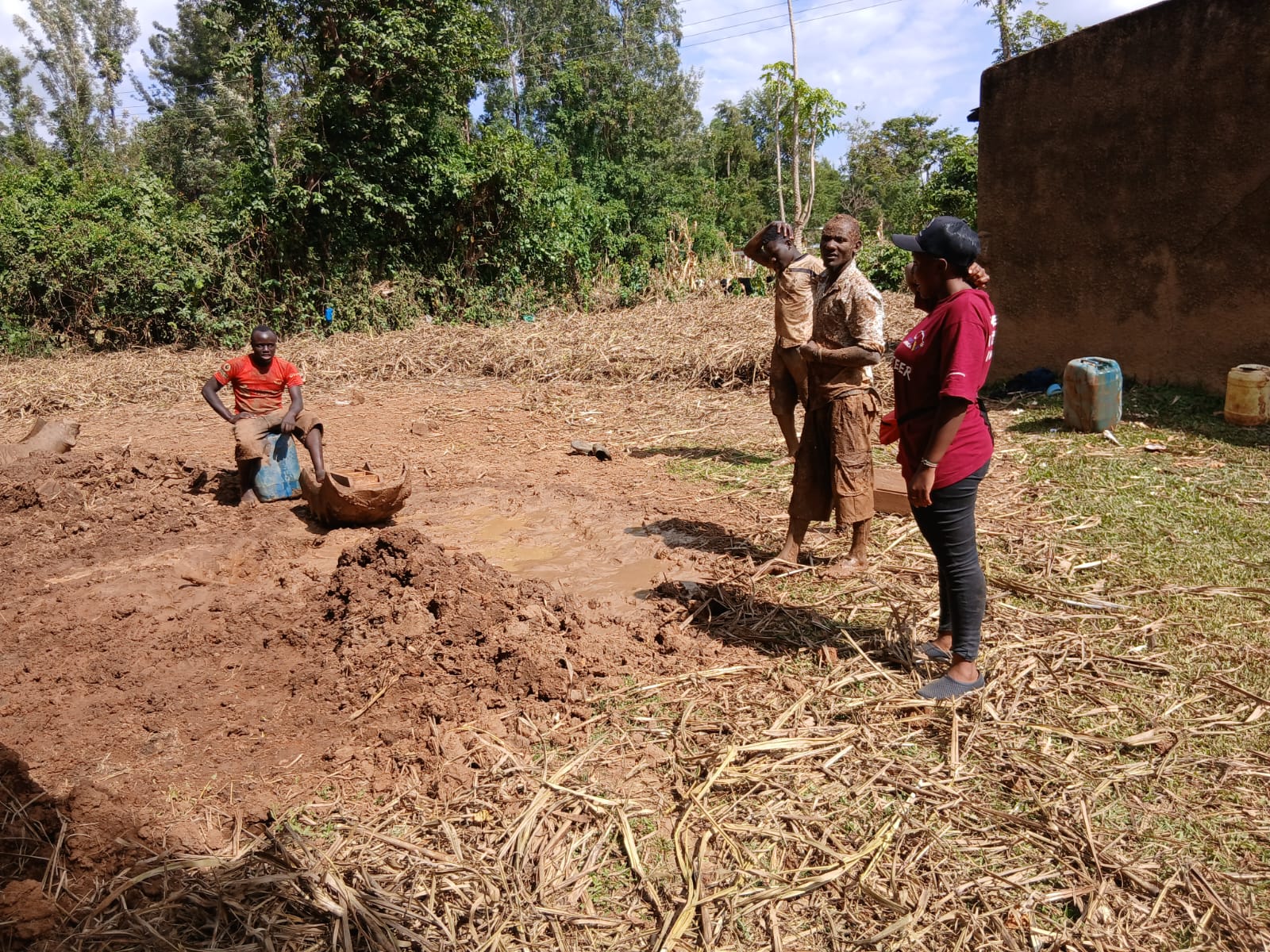
It begins with soil selection. Not every type of soil can produce strong bricks. They carefully identify clay-rich soil, mix it with water, and knead it thoroughly using their feet and hands until it reaches the right consistency; firm, smooth, and moldable. I was invited to step into the mixture and help with the kneading. It was heavier than I expected, and it gave me a deep respect for the physical effort behind every single brick.
Once the mixture is ready, it is pressed into wooden moulds. The brick makers work with impressive speed and precision; filling the mould, leveling the surface, and gently lifting the frame to reveal a perfectly shaped brick. I tried moulding one myself, and although mine was not as neat as theirs, the experience helped me appreciate the skill involved. Each freshly moulded brick is carefully placed in rows under the sun to dry for several days. The sun plays a critical role here, slowly hardening the bricks before they are ready for the next stage
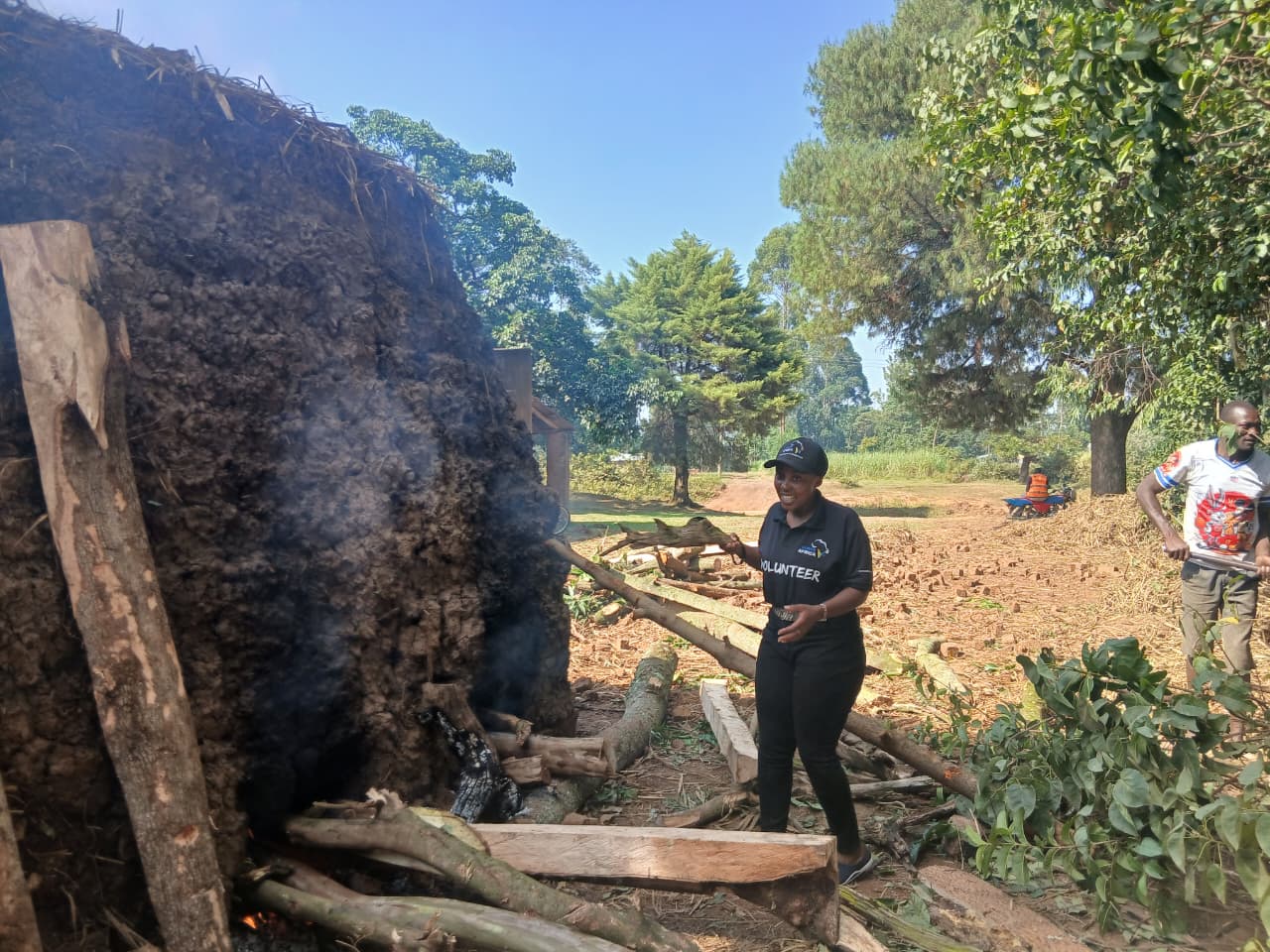
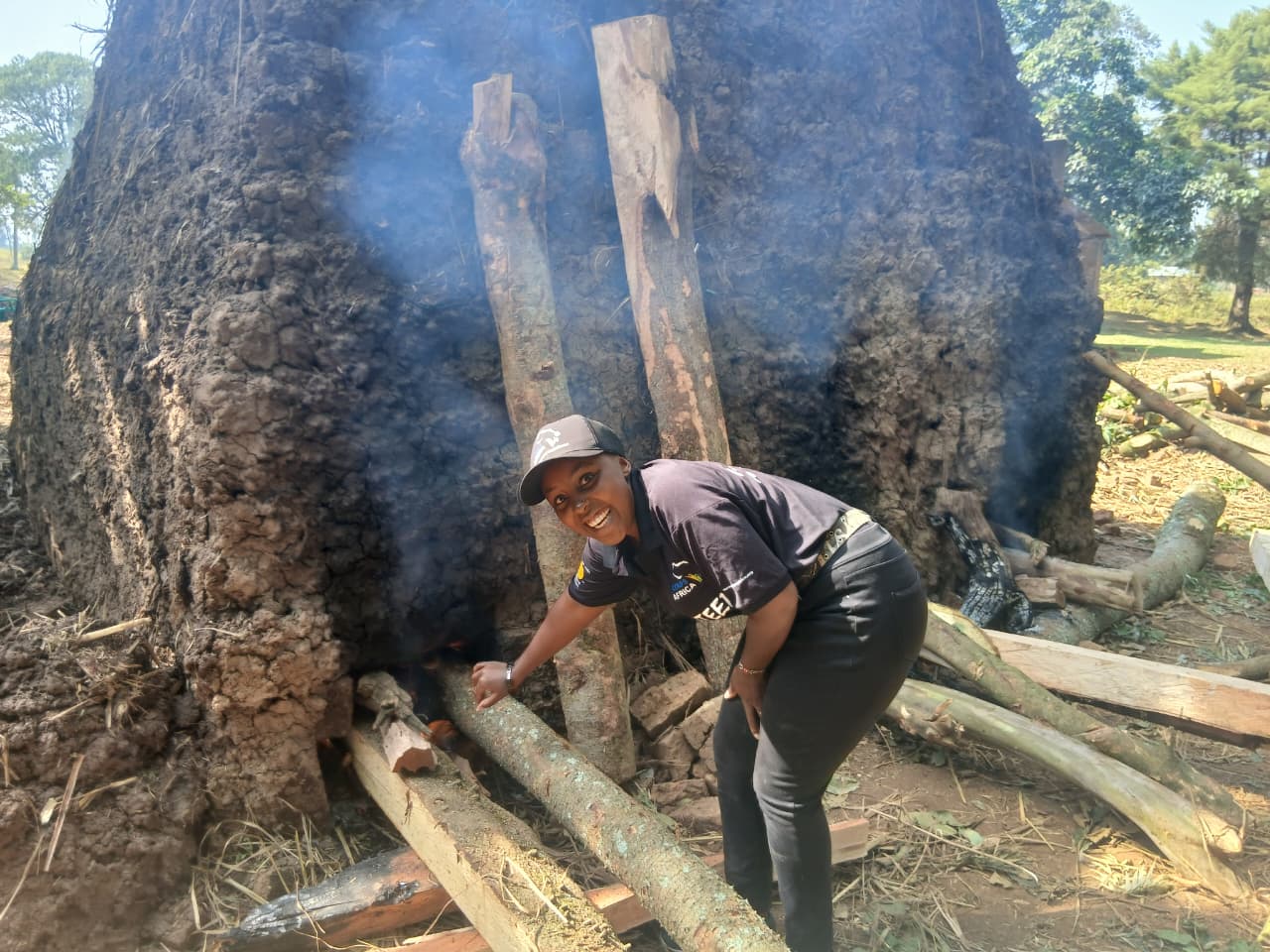
After drying, the bricks are stacked strategically into a kiln-like structure and covered with soil. Firewood is then used to bake them over several days. This controlled burning transforms the fragile mud blocks into strong, durable bricks ready to build homes, shops, and schools. Watching that transformation, from soft earth to solid structure, felt symbolic. It mirrored the strength and determination of the community itself.
Beyond the process, what stood out to me was the sustainability of this livelihood. The materials are locally sourced, reducing transportation costs and emissions. The sun is used as a natural drying agent before baking, minimizing energy use. Brick making provides an affordable alternative to industrial construction materials while creating income for families within the community. It keeps resources circulating locally and supports self-reliance.
At the same time, conversations with the brick makers revealed growing awareness about environmental responsibility. They acknowledged the need for careful soil harvesting and responsible firewood use. Some spoke about tree planting and improving kiln efficiency to reduce environmental impact. These discussions showed that sustainability here is not just about income, it is about protecting the very land that makes their work possible.
As I walked away from the site, my shoes dusted with clay and my hands marked by dried mud, I reflected on what I had witnessed. In Eshironyanga, bricks are more than building materials. They represent opportunity, dignity, and the power of local solutions. They are shaping houses, yes, but they are also shaping livelihoods and strengthening community resilience.
Serving here continues to remind me that development does not always arrive in large, complex packages. Sometimes, it begins with soil, water, and willing hands, building the future one brick at a time.