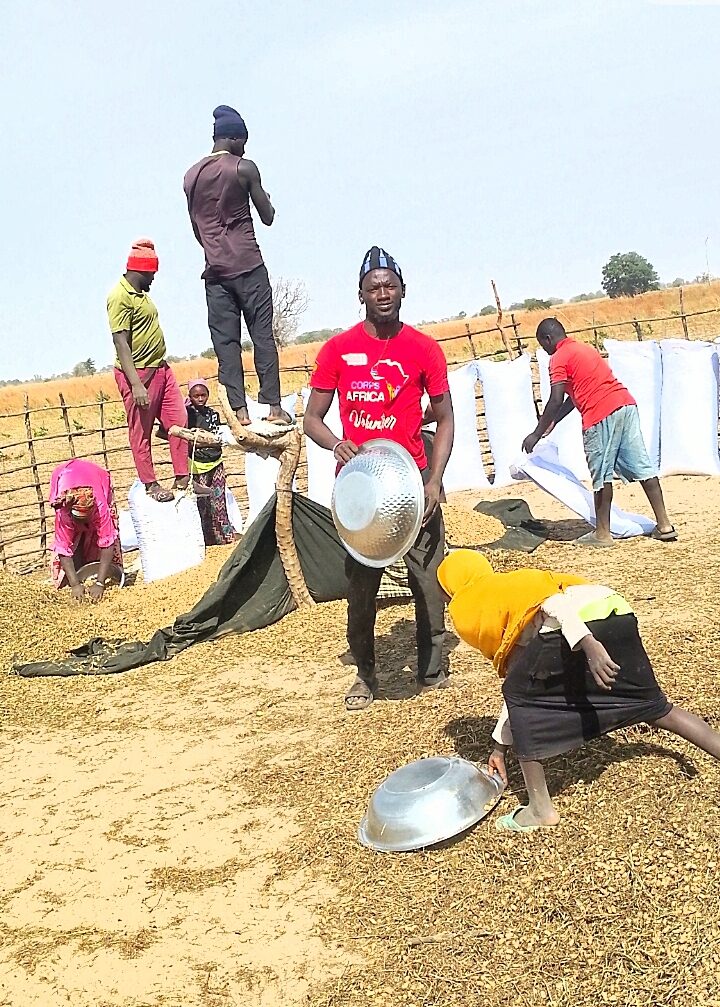
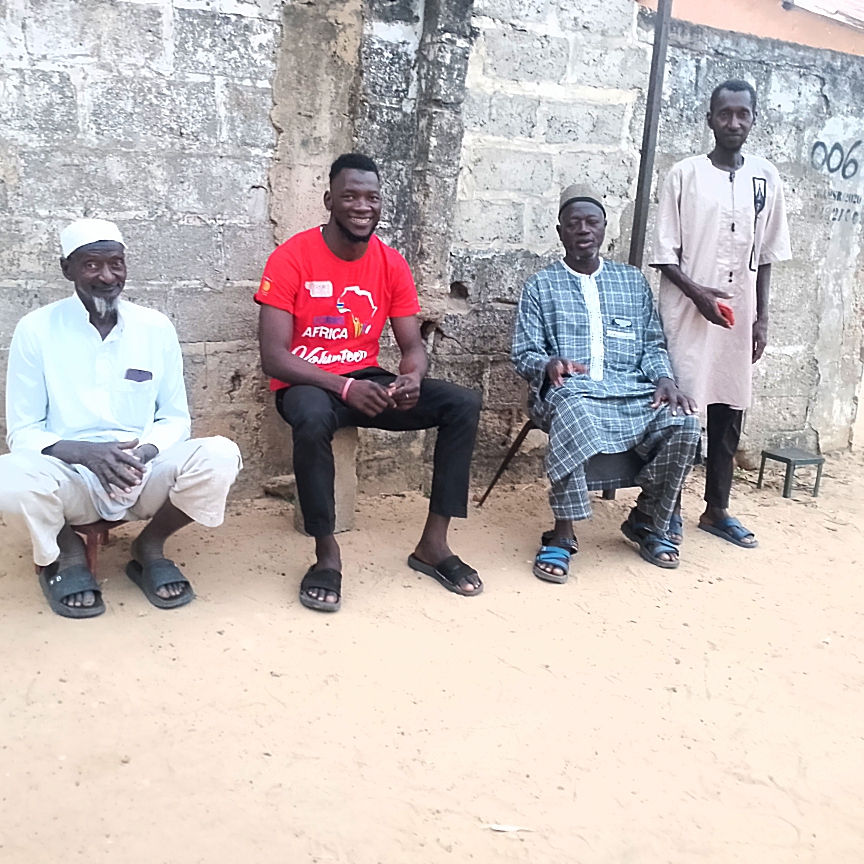
When we are told to lower our expectations in the communities and we say no, this is what happens.
Experiencing the realities in our various communities commenced when we were finally deployed in my communities on Monday, 15th December 2025. This was when I truly got to understand the meaning of the phrase that lower your expectations in your communities”. Life will be humbling and sometimes challenging, no doubt that’s volunteerism. These phrases seem to be awkward and a laughing matter but it was truly a signal that life in the urban areas is quite different from rural Gambian communities.
To limit our expectations on rural lifestyles –accommodations, gestures and most importantly on the different kinds of meals. Navigating all these cultural and social dynamics will test our patients, resilience and adaptability in our communities.
When I newly arrived in my community on Monday evening, I felt welcomed and the kind gestures I received left me speechless. I can read this from the face of my new community members –especially my host mother, Mborri. The exchange of greetings in the famous Gambian Mandinka language almost felt like peter jury’s poetry —It was like;
‘jehmoulu lay? ebay beh jeh.” It means, “who are your people over there, they are there fine”
“kortanna teh? taanawo tanateh” “Hope everything is fine, thank god there is well”
“inneg faama? nbay ning faama” “It has been a little while, indeed, it has been”
“Eyoi ebsimillah!” “Alright you are welcome”
This little moment of exchanging greetings set my expectations a bit high hoping that everything will be well with me in the community. But guess what? That was a different case. Challenges begin to slowly pop up which I am to silently battle with them. I said to myself that I gave myself for service and also believe that support from staff and my fellow volunteers like, Faye, Buba, Jorbateh will be enough for me.
After spending days in our communities, our G3 Never Give Up WhatsApp Group became a market place where every volunteer sends his/her challenges and “kaas”. Then I started sharing some of the challenges in the group. In the beginning, many thought it was a laughing matter and we all began to laugh about everything that was sent in the group –unfamiliar foods. Some volunteers who are so jovial laugh and crack the walls of their rooms with laughter not knowing what is ahead. The dramatic responses from volunteers regarding those challenges and “kaas” was like “my brother, you are finished!”, “my brother you are dead!”. These clauses brought laughter but it served as a coping mechanism as well.
In the early days of integration, early warning alerts like hunger became a joke and a funniest thing among volunteers. This sparked several dramatic questions from funniest volunteers;
“Hello Volunteers! how are your diet?”,
“How is the weather condition in your community?”,
“Who has taken his meals so far?”
These questions put us in a constant state of laughter again and again but it makes us even stronger than before. I adapt to these challenges in the first two weeks but hunger is not funny when it becomes constant. Over time, the effects became visible in my wellbeing –fatigue, weight loss and dehydration become the order of the day. All these signify that volunteerism is nowhere close to personal confrontment but experiencing first hand realities that teaches us patience, resilience and adaptability.
I could have brought this to the attention of my VLs but in the Gambian social setting, this will signify a sense of ungratefulness to the little that the community is offering to me. My host family could provide nothing more than what they are providing and that’s the nature of many rural settings. I’m forever grateful for their little efforts.
As night ends every 24/7, my laughter and jokes gradually fade away and the realities in the communities begin to hit. After having a chat with my colleagues, I realized that meals were sometimes irregular not only for me but a large chunk of volunteers. Now my mood swings from finding comfort in the meals and accommodation to survival mode –to fill my stomach with any food that is available and “My pot of Garri” plays an important role in this situation. This tested my level of resilience not knowing that I am prepared for this. I began to prepare “garri” in my house to sustain myself. Attending social events are part of my integration activities so I can eat foods that are quite familiar.
One day my host dad asked why I am not eating as usual? I responded in a respectful tone that I am eating well. Looking at the community’s location, and the level of awareness, what I received from them is the best that they can provide for me. I’m grateful.
Volunteerism is a powerful weapon that transforms rural communities and addresses their most challenging issues. All the challenges and “kaas” taught me that volunteerism is a transformational journey that shaped us into the best version and requires the highest level of patience, resilience and adaptability.
Laughter is what we use to cope but it eventually fades when our expectations fall apart.
Setting our expectations higher left many Volunteers disappointed and what started as a laughter ended up in concerns defining my experiences in my community.