Not every lesson in development happens in conference rooms,or strategic meetings filled with charts and presentations.Sometimes, the most meaningful lessons happen in the field, sitting side by side with community members and learning through the rhythm of everyday life.
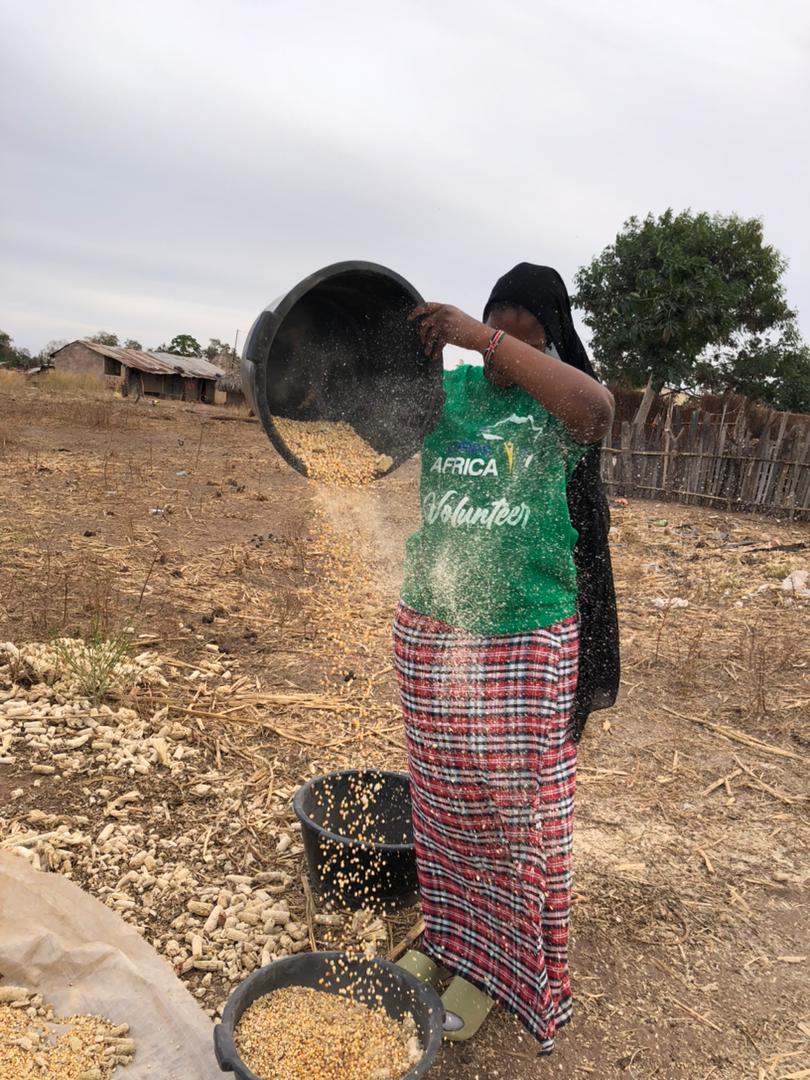
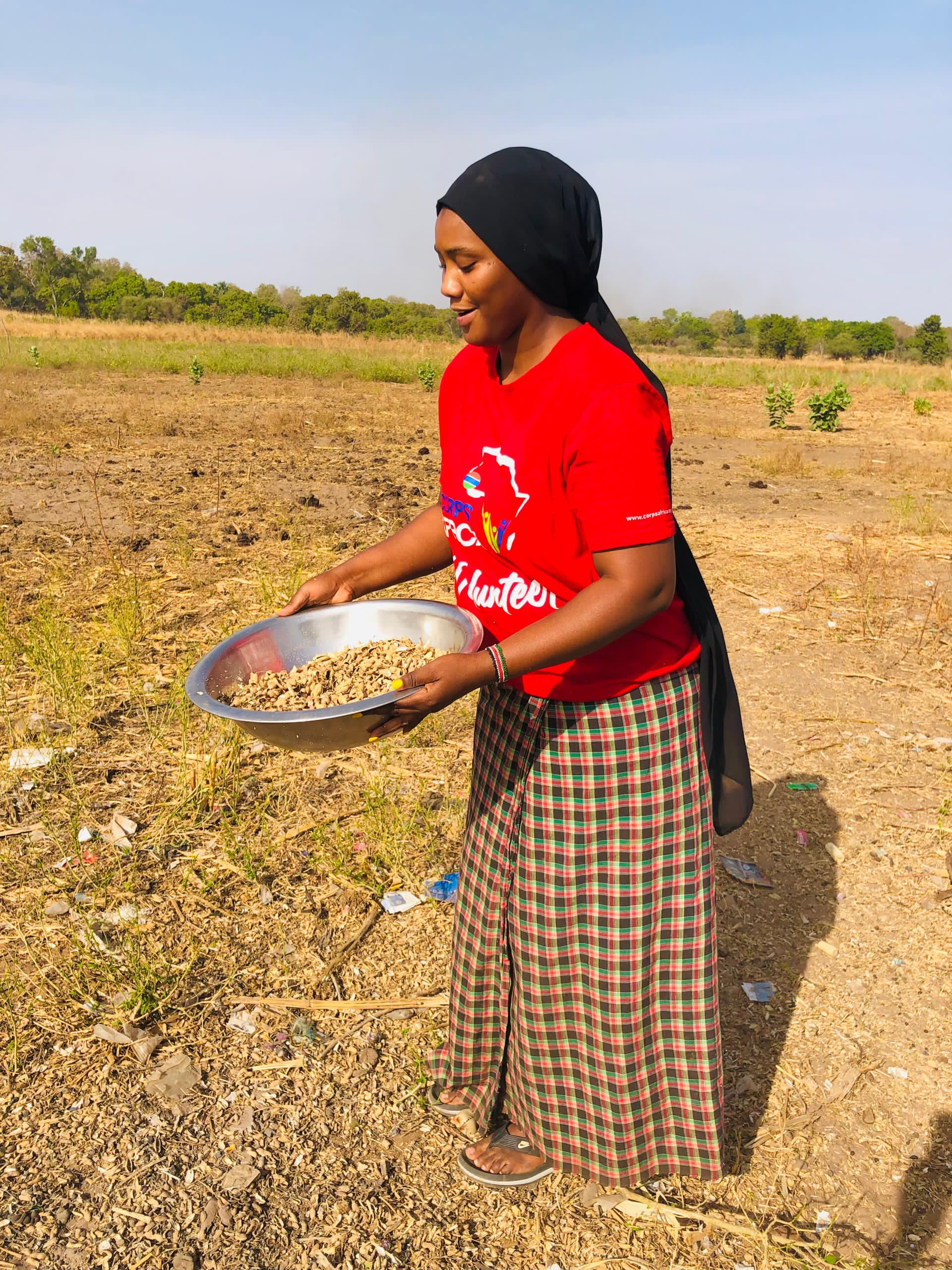
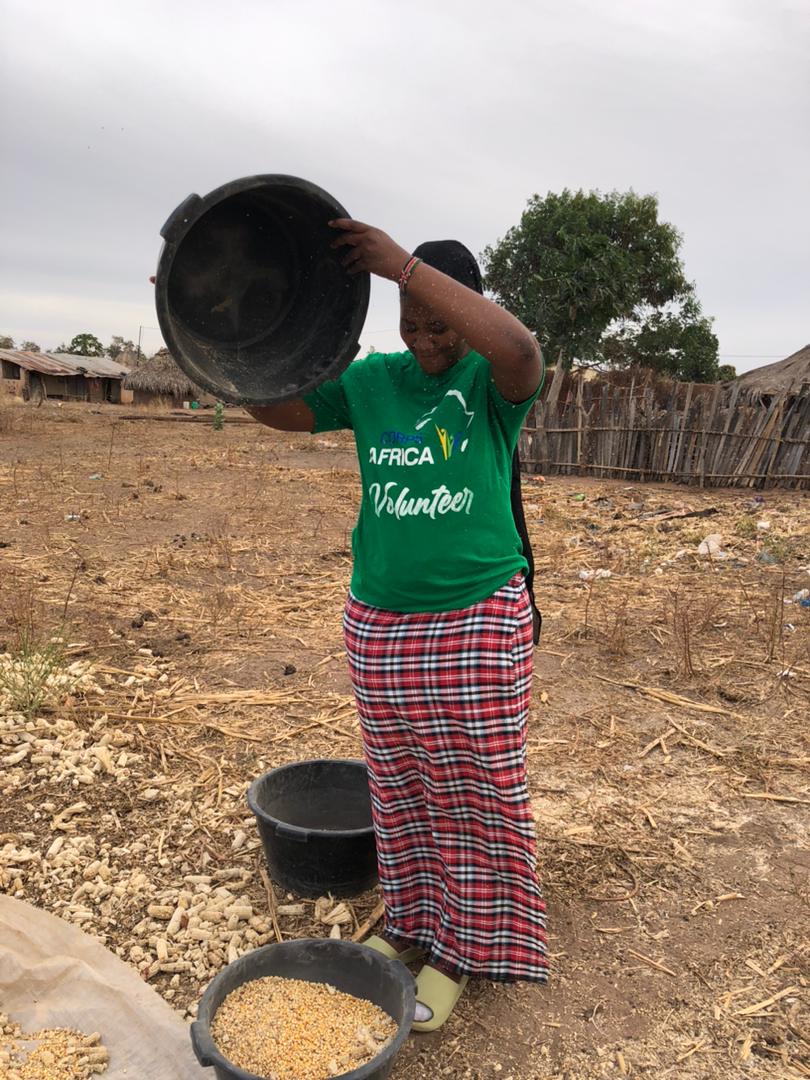
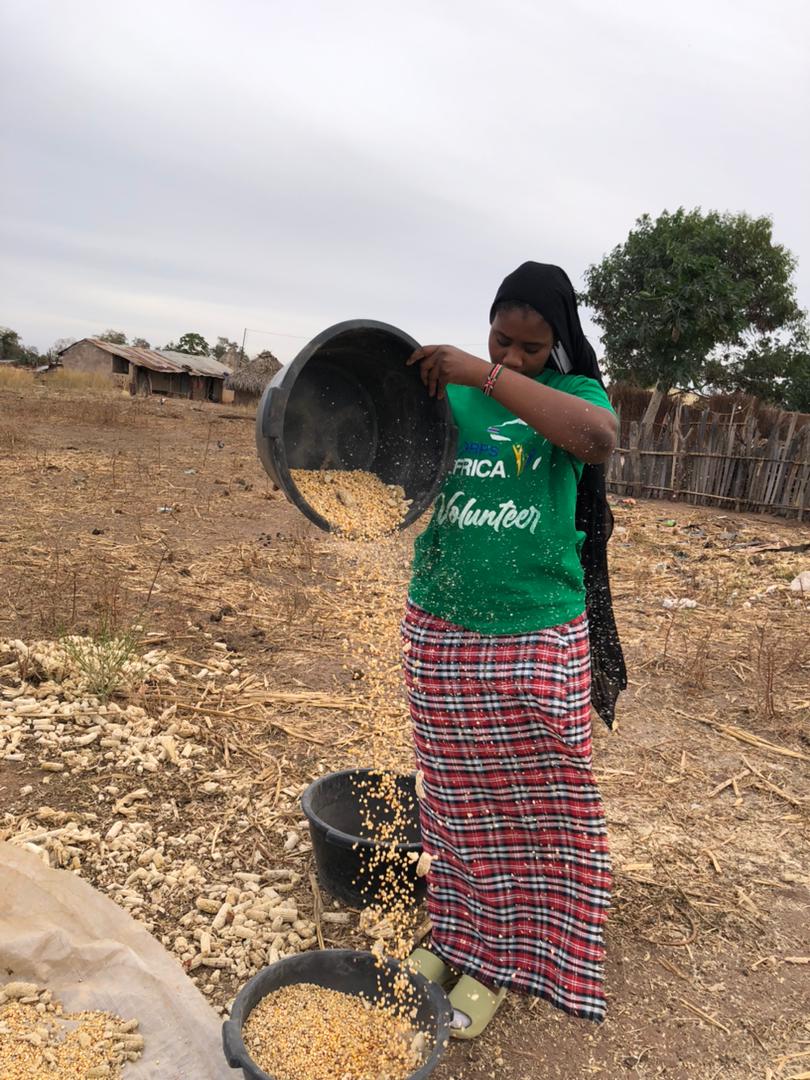
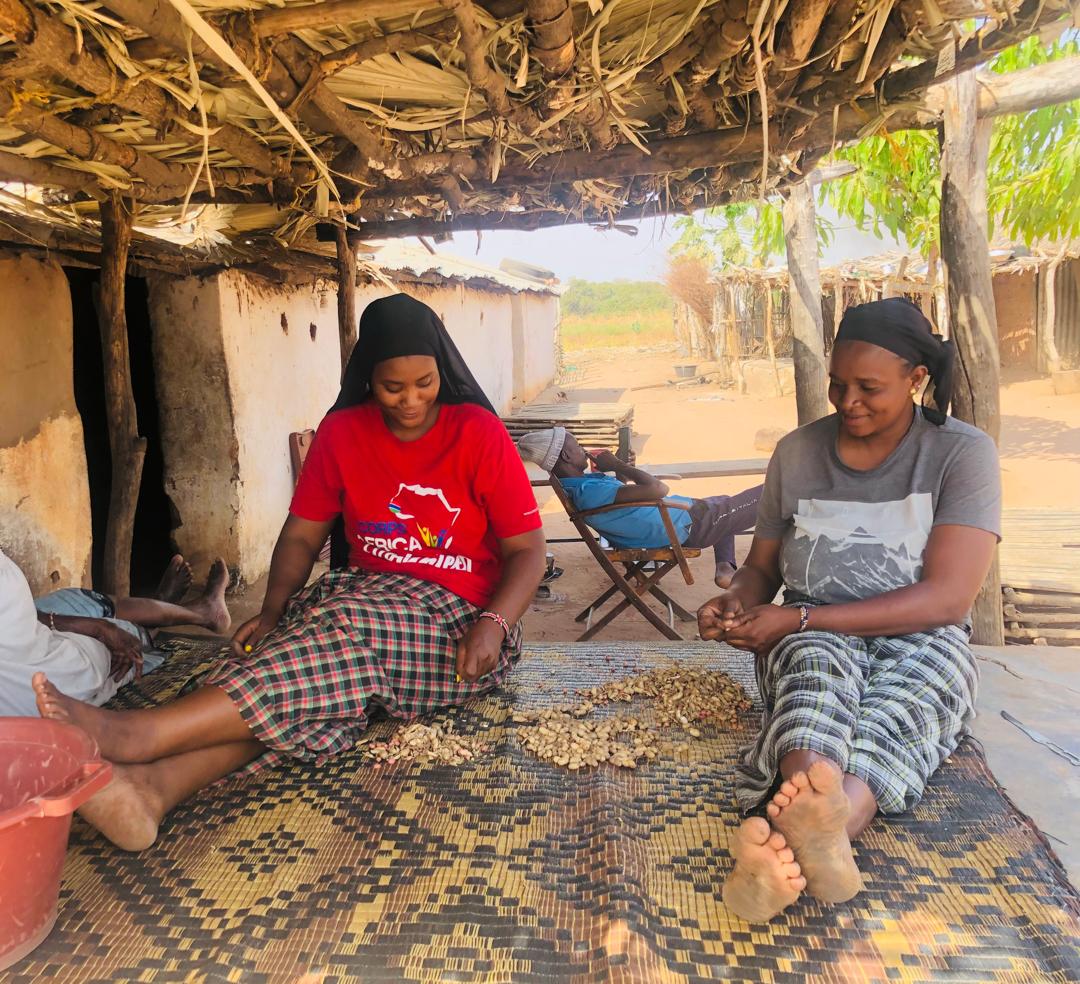
One afternoon, I found myself doing something that at first seemed very ordinary, sifting groundnuts. With a bowl in my hands, I joined community members as we gently swirled the mixture of groundnuts, shells, and dust. With each careful motion, the lighter shells and dust separated from the nuts, leaving the clean groundnuts behind.
It looked simple, but it required patience, rhythm, and skills. The women and farmers around me performed the task with such ease and confidence that it quickly became clear that this was not just routine work it was knowledge built through years of experience.
As a CorpsAfrica volunteer, I have come to understand that development is not always about big projects or complicated plans. Sometimes it begins with something much smaller, listening, observing, and learning from the people who live the reality every day.
During the groundnut sifting, conversations naturally flowed among us. Community members talked about the challenges farmers face, from unpredictable weather patterns to rising market prices. They shared stories of past harvests and discussed ways to improve storage and protect their crops. These discussions were informal, yet incredibly insightful.
For me, this moment was more than just helping with a routine activity. It was a powerful reminder that development is not only about introducing new ideas or technologies. Sometimes, it begins with understanding the knowledge that communities already have and recognizing the value in their daily practices.
Groundnuts and maize may appear like simple crops to some, but here they carry immense meaning. They represent food on the table, income for families, and stability for the community. From planting to harvesting, drying, cleaning, and preparing, every stage requires dedication and care.
As a CorpsAfrica volunteer, my role is not to arrive with ready made solutions, but to listen, learn, and work alongside the community. This approach is at the heart of community-led development. It emphasizes partnership rather than prescription, collaboration rather than control.
Sitting there with the farmers, I began to appreciate how much knowledge is embedded in even the smallest activities. The way the bowl was tilted, the gentle motion used to separate the shells, and the careful attention given to the final product all reflected years of experience. These are skills that cannot be learned in a classroom or through a manual, they are passed down through practice, observation, and tradition.
Moments like this have reshaped my understanding of development. Before joining CorpsAfrica, I thought impact was mainly about large scale projects or visible infrastructure. But my experience in the community has shown me that real impact often starts with something much simpler, building trust and mindset change.Trust grows when you sit with people, share their daily routines, and genuinely listen to their stories. It grows when community members see that you are willing to learn from them rather than simply instruct them. Over time, these small interactions create the foundation for meaningful collaboration.
As a CorpsAfrica Volunteer, these experiences have taught me that development is not about imposing change from the outside. Instead, it is about creating space for communities to lead their own progress. When people are given the opportunity to identify their priorities and use their strengths, the solutions that emerge are often more sustainable and meaningful.
The process of sifting groundnuts may seem like a small moment in the grand scheme of development work, but it symbolizes something much larger. It represents the power of participation, humility, and respect. By taking the time to engage in everyday activities with community members, I gain a deeper understanding of the realities people face and the strengths they possess.
This understanding is essential for anyone working in community development. It reminds us that knowledge does not only exist in textbooks or policy documents. It also exists in the hands of farmers, the wisdom of elders, and the daily experiences of families who work hard to sustain their livelihoods.
For me, being part of these moments is one of the most rewarding aspects of serving with CorpsAfrica. Every day presents a new opportunity to learn, to connect, and to grow not only as a volunteer, but also as a person.
The field where we sifted those groundnuts may not look like a classroom, but it has become one of my greatest places of learning. It is where I have learned the importance of patience, the value of listening, and the power of community knowledge.
Development, after all, is not only about the projects we implement. It is also about the relationships we build, the respect we show, and the lessons we are willing to learn along the way.
And sometimes, the most meaningful lessons begin not in a meeting room, but in the field sifting groundnuts with community members.