Upon first arrival into my community as a CorpsAfrica Volunteer, I carried two suitcases and a heart full of purpose, but very few of the right words. Growing up far from Malawi, let alone rural Malawi, and suddenly finding myself surrounded by warm, curious faces speaking Chichewa with ease, laughter flowing faster than my understanding, was daunting to say the least. I was home, yet everything felt unfamiliar. This is a personal journey about discomfort, humility, and how language slowly became a bridge instead of a barrier.
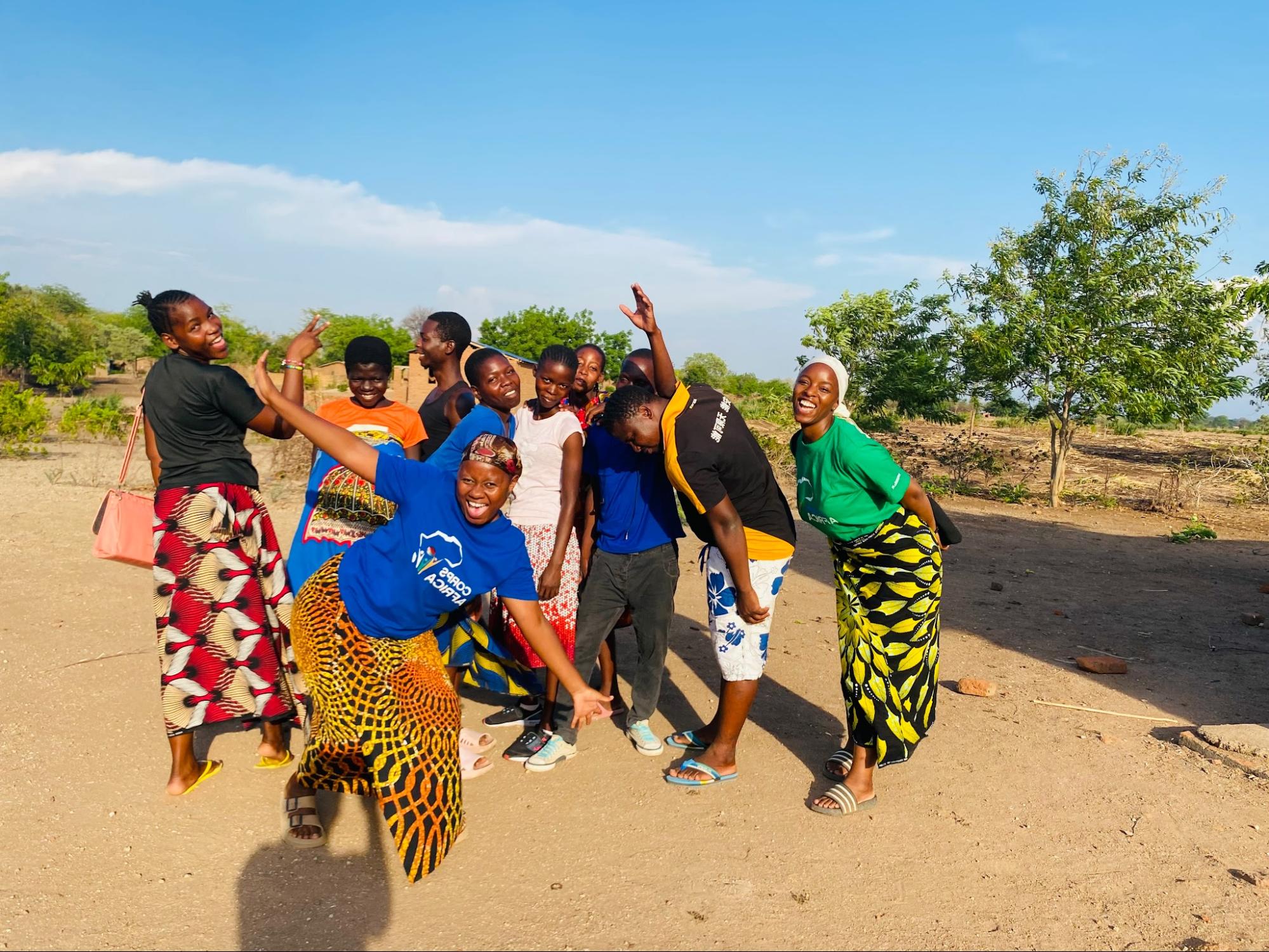
My first days in the village were overwhelming. Community meetings buzzed with conversation, jokes sparked laughter, and greetings were exchanged rapidly, all in Chichewa. I smiled often, nodded a lot, and relied partially on gestures. Simple tasks like greeting elders, asking for directions, or explaining why I was there felt like climbing a mountain with no map. Despite sharing the same country, my upbringing had placed me at a distance I hadn’t anticipated. One day, I was asked to introduce myself at a small community gathering. I had practiced what I wanted to say in Chichewa the night before, repeating it quietly to myself. When the moment came, my mind went blank halfway through. I paused, took a breath, and finished the sentence in English. The room went quiet for a second, and the panic sank in after realizing they probably had no idea what I just said. Only for a handful of women to start clapping and later praise me for my effort. Over time, I realized that learning a language did not begin with speaking, but with listening. My Chichewa was broken, sometimes unintentionally funny, but every attempt was met with encouragement. Slowly, phrases turned into sentences, and sentences into conversations.
Just as I began to feel confident in Chichewa, I discovered another layer of learning, Sena. Spoken casually in parts of the community, Sena introduced me to new sounds, rhythms, and cultural expressions. Children became my teachers, laughing as they coached me through greetings and everyday phrases. Learning Sena reminded me that language is deeply tied to identity, and that showing effort was more important than perfection. As weeks turned into months, something shifted. I no longer felt like a visitor watching life happen around me. I could greet elders respectfully, joke lightly with the youth, and understand community concerns without constant translation. Language opened doors to trust, collaboration, and genuine connection. The struggle has shaped me, teaching patience, humility, and the power of showing up even when you feel unprepared.
Adjusting to life in a rural community where I initially could not communicate was one of the hardest parts of my CorpsAfrica service, but also the most rewarding. Learning Chichewa and Sena was not just about words; it was about belonging. Each new phrase brought me closer to the people I serve and reminded me that growth often begins in discomfort.
If you’re considering service, volunteering, or stepping into an unfamiliar community, don’t let fear of language or adjustment hold you back. Lean into the discomfort, listen more than you speak, and allow yourself to learn from the people around you. Sometimes, finding your voice starts with being brave enough to say, “Ndikuphunzira.”