I remember vividly, as if it were yesterday, the day I received an email from the CorpsAfrica office informing me that our project had been selected to be pitched. A huge smile spread across my face, adrenaline rushed through my body, and my heart pounded fast. I felt deeply grateful, knowing what a great opportunity it was to represent my community in front of influential people.
At the same time, my mind was filled with questions. What if my counterpart and I fail to represent our community well? What if we cannot answer the questions, despite understanding the project? What if I become the center of attention for the wrong reasons? But alongside these doubts, there was hope. What if we do well? What if this opens doors? I kept reminding myself, this is an opportunity to show the work we’ve done and what we are capable of.
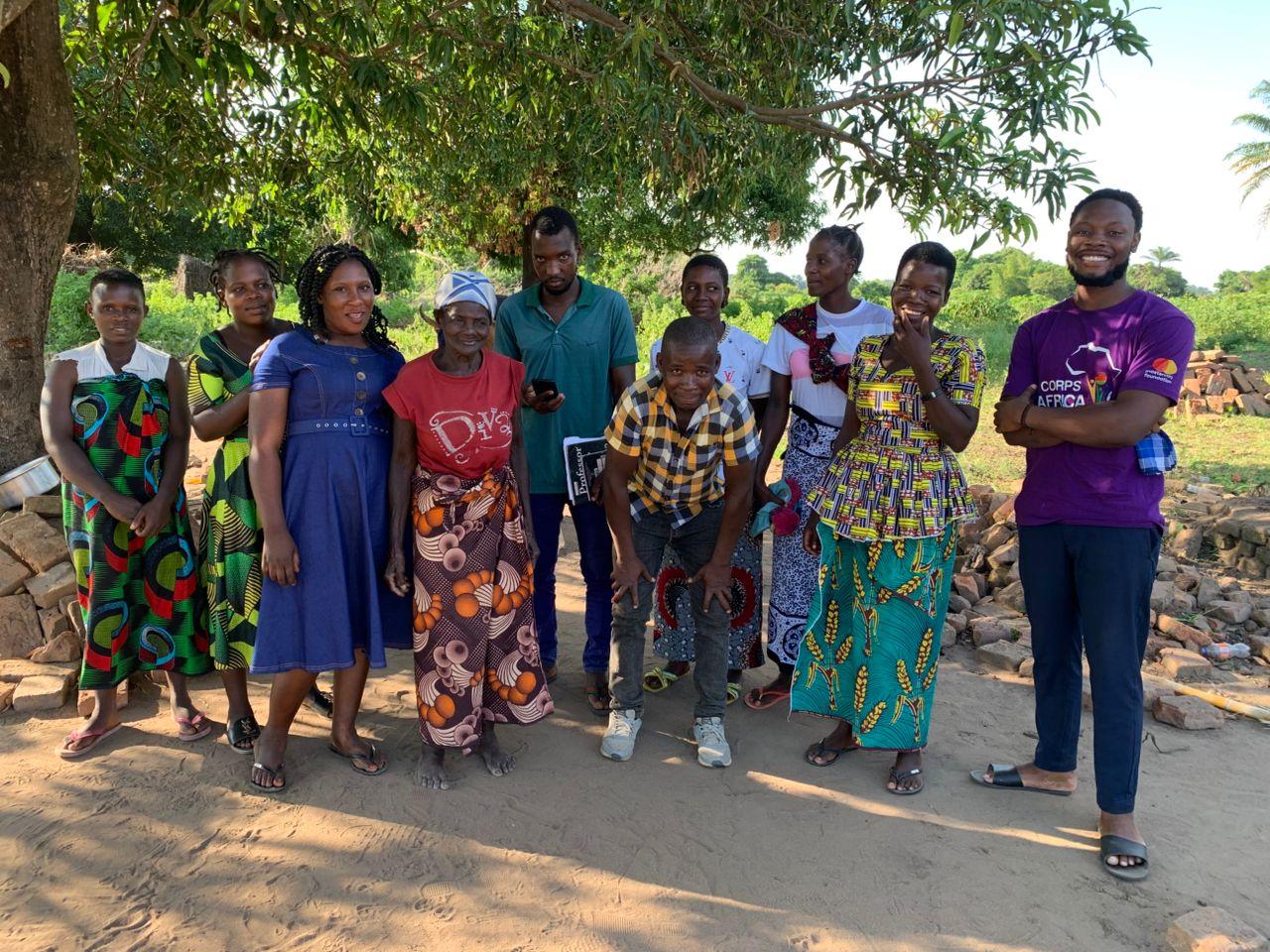
After seven months of serving in Mwantende community in Karonga district—learning the Nyakyusa language, eating foods I had never tasted before, and building relationships—I found myself appreciating the beauty of the community. I remember waking up early and seeing farmers heading to their fields as early as 3 a.m., returning late in the afternoon. Their hard work amazed me. Watching the morning sun shine over sprouting rice remains one of the most beautiful sights I have experienced.
But as I got to know the community better, I began to see the deeper challenge. Farming was mainly rain-fed and seasonal. After harvest, land remained unused, and many young people were left without income. This cycle led to unstable livelihoods and vulnerable households. What stayed with me was the contrast—the community had fertile land and water sources, yet limited income opportunities.
Through conversations with community members, we began exploring solutions. Sitting together under a tree, we discussed possibilities—livestock, small businesses, and other ideas. But one idea kept coming back: farming all year round. This idea was narrowed down through a participatory process guided by principles of community-led development (CLD), which advocates for involving grassroots in being the change they want to see by developing human-tailored solutions through human-centered design (HCD) and building on the assets that the community has through asset-based community-led development (ADBCLD) to ensure sustainability, and later, the idea of solar-powered irrigation emerged. It was not my idea alone—it was built together, shaped by the community’s knowledge, experiences, and aspirations. My role was simply to support and guide the process.
The journey to pitch day was not easy. There were moments of frustration and doubt. Sometimes we planned meetings and no one showed up. I would sit alone under a tree in the Karonga heat, wondering if we would succeed. When we were told I had only three minutes to present and two minutes for my counterpart, it felt impossible. How could we present everything in such a short time?
Preparing for the pitch pushed me beyond my comfort zone. I had to simplify complex ideas, manage time, and prepare for tough questions. At times, I feared the day more than I looked forward to it. But through practice and support from CorpsAfrica staff, I began to grow. I discovered that I could adapt quickly and remain calm under pressure. I realized the power of preparation.
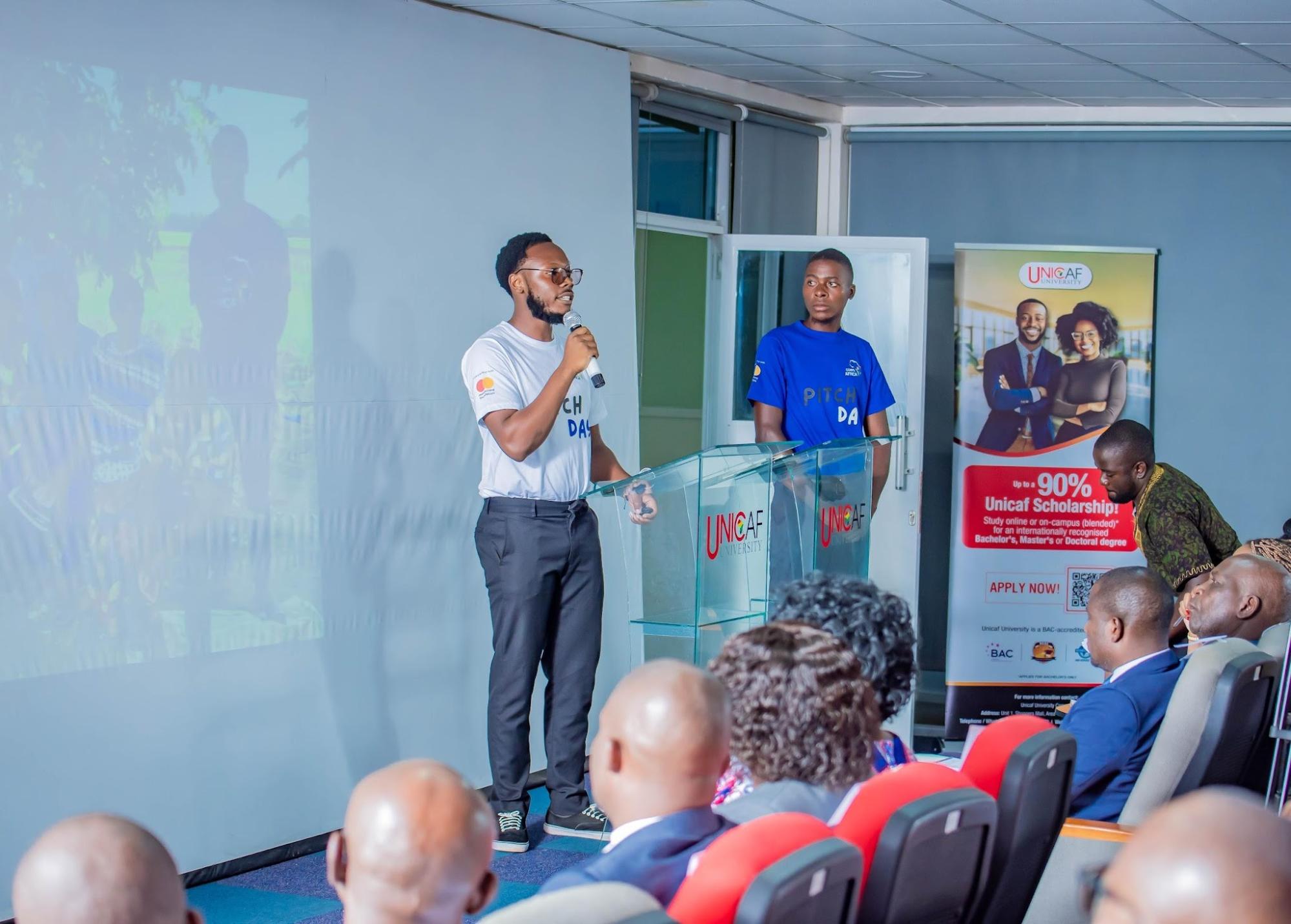
Then came 17th April 2026—a day I will never forget. As we arrived at the venue, my mind replayed the presentation over and over. Fear and excitement flowed through me at the same time. Walking into the room, the cool air from the air conditioners calmed me slightly, but everything became real when the guests started arriving—representatives from international organizations, influential individuals, and the media.
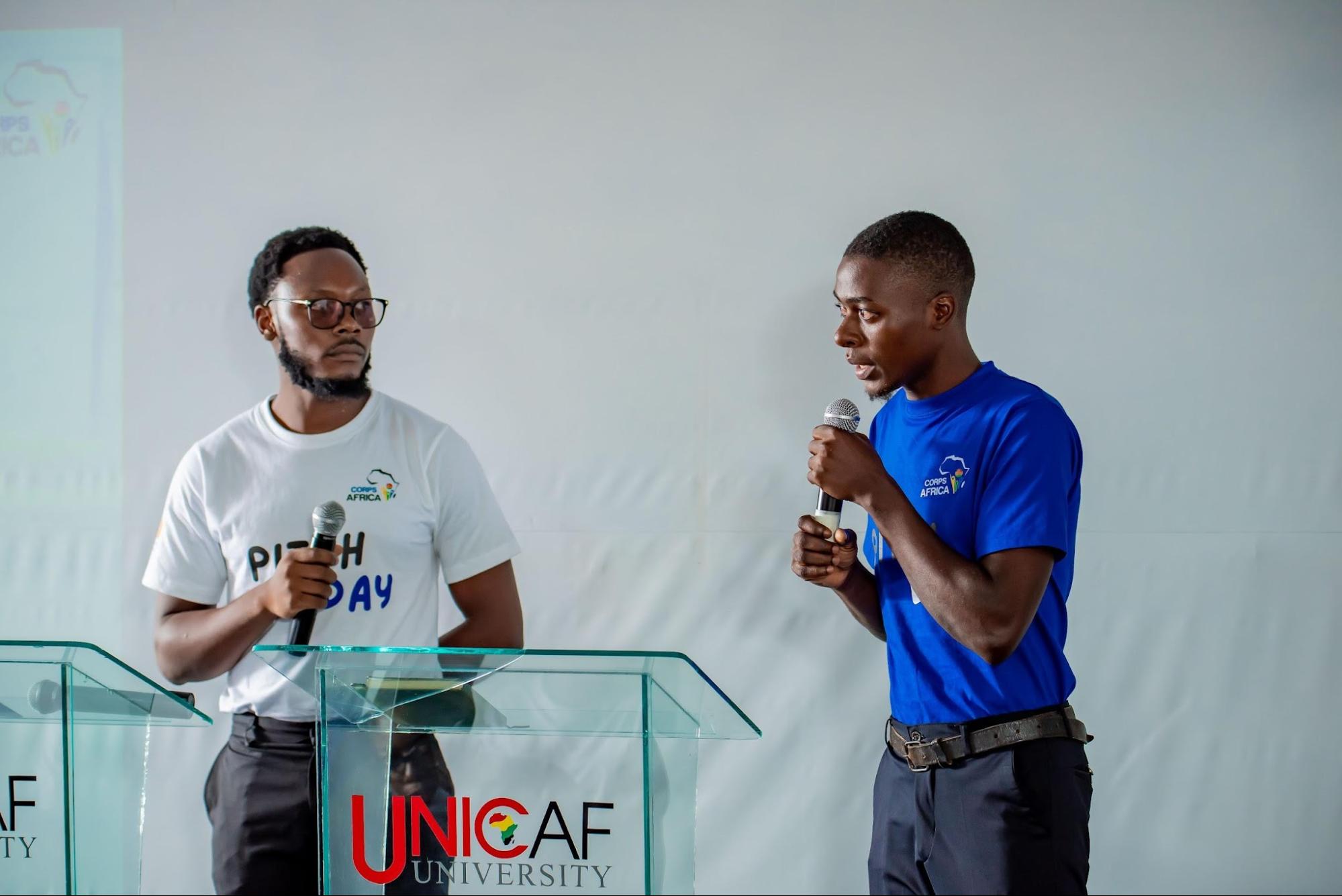
We were scheduled to present third. I remember the host calling my name and asking if I was ready. With a steady voice, I said, “Yes, I am ready.” Before I could process it fully, we were called forward. Surprisingly, my mind became calm. Together with my counterpart, we stepped onto the stage and began.
Standing in front of the audience felt like being under a spotlight. I told myself, “You understand this solution—just be honest and be yourself.” As we presented, confidence replaced fear. We shared our story, our solution, and our vision. When the questions came, I paused, thought carefully, and responded. In that moment, I realized how much I had grown.
After the presentation, my counterpart shared something that stayed with me: “Standing there, I felt like our community was finally being heard. This project is important to us because it gives our youth a chance to work all year round and change our lives.” His words reminded me that this was never just about a presentation—it was about people.
My favorite moment came right after we finished presenting. There was a brief silence before the questions began. In that silence, I felt pride, relief, and a deep sense of accomplishment. It wasn’t about being perfect—it was about showing up and doing something I once thought I couldn’t do.
This experience taught me more than I expected. I learned how to stay calm even when I felt nervous. I learned how to communicate clearly and confidently. Most importantly, I learned to trust myself. If I were to do it again, I would believe in my abilities earlier and embrace the process with more confidence.
Looking ahead, I see our project as an opportunity to transform lives. I imagine young people working throughout the year, earning income, and breaking free from seasonal challenges. I see households becoming more resilient and secure. But this vision requires support—financial, technical, and collaborative.
This experience showed me that when communities are involved and young people are empowered to lead, real solutions can emerge. That is why I believe in youth-led solutions—and why others should too. If not us, then who? If not now, then when? – John Lewis.