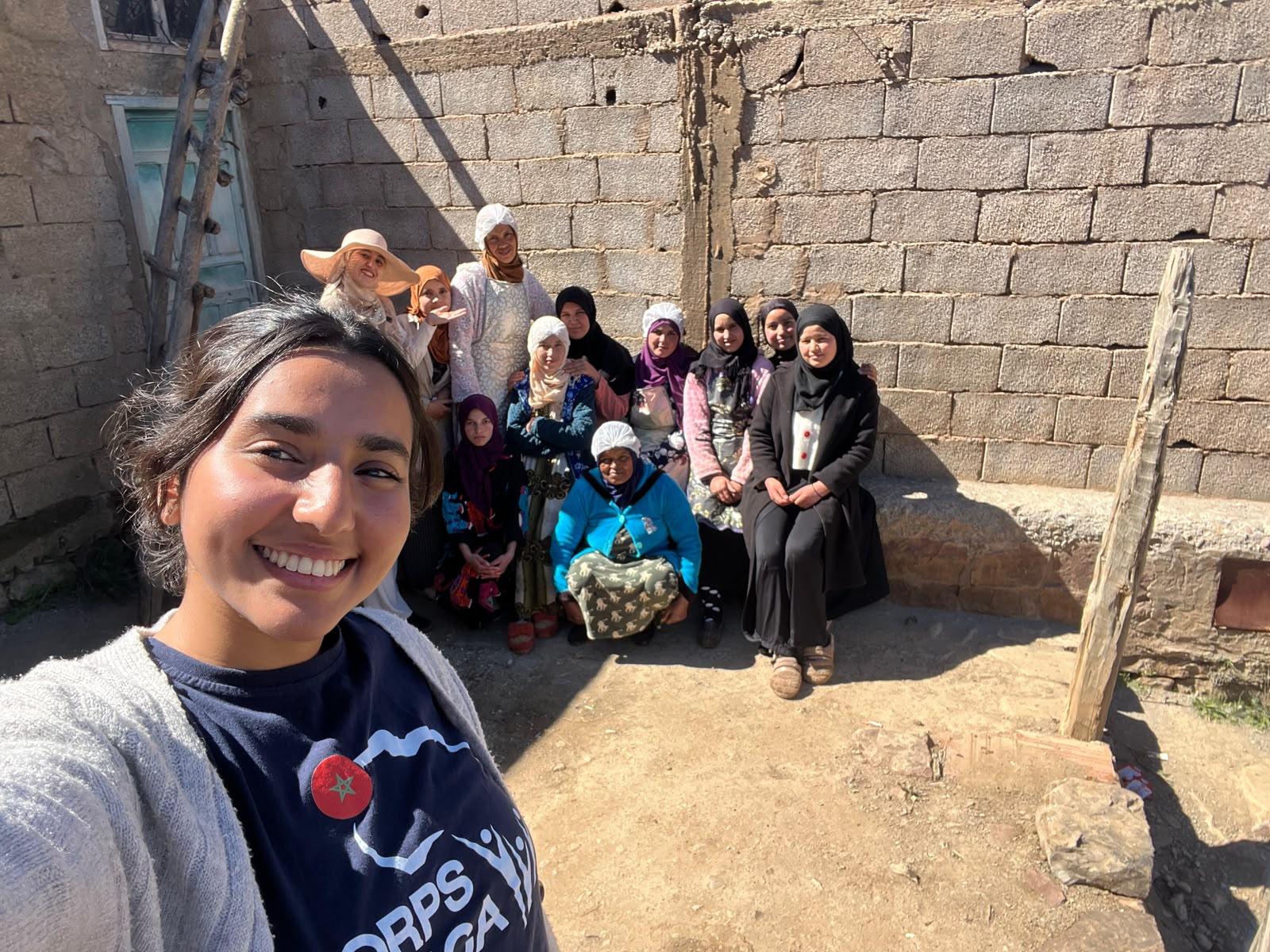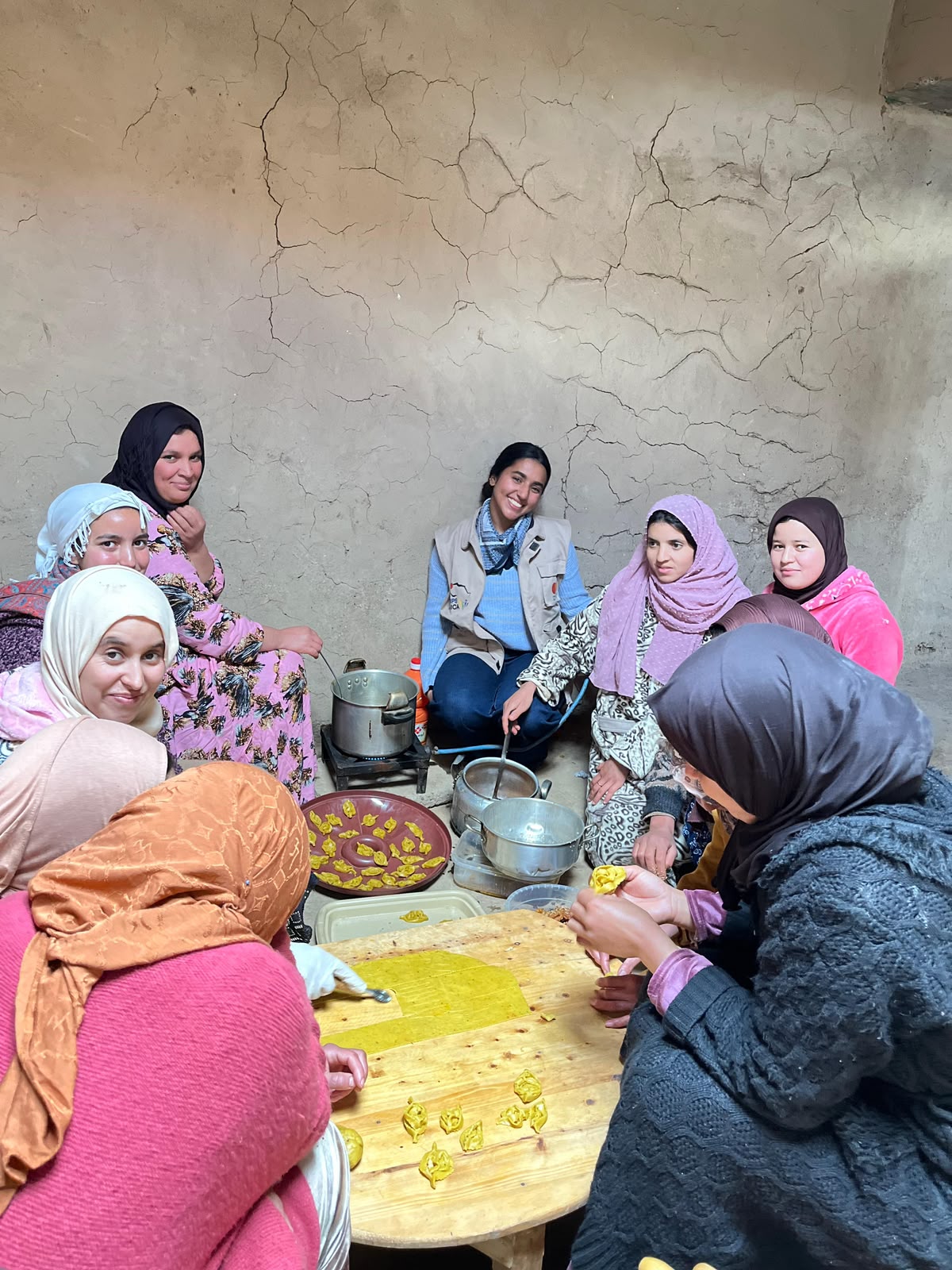
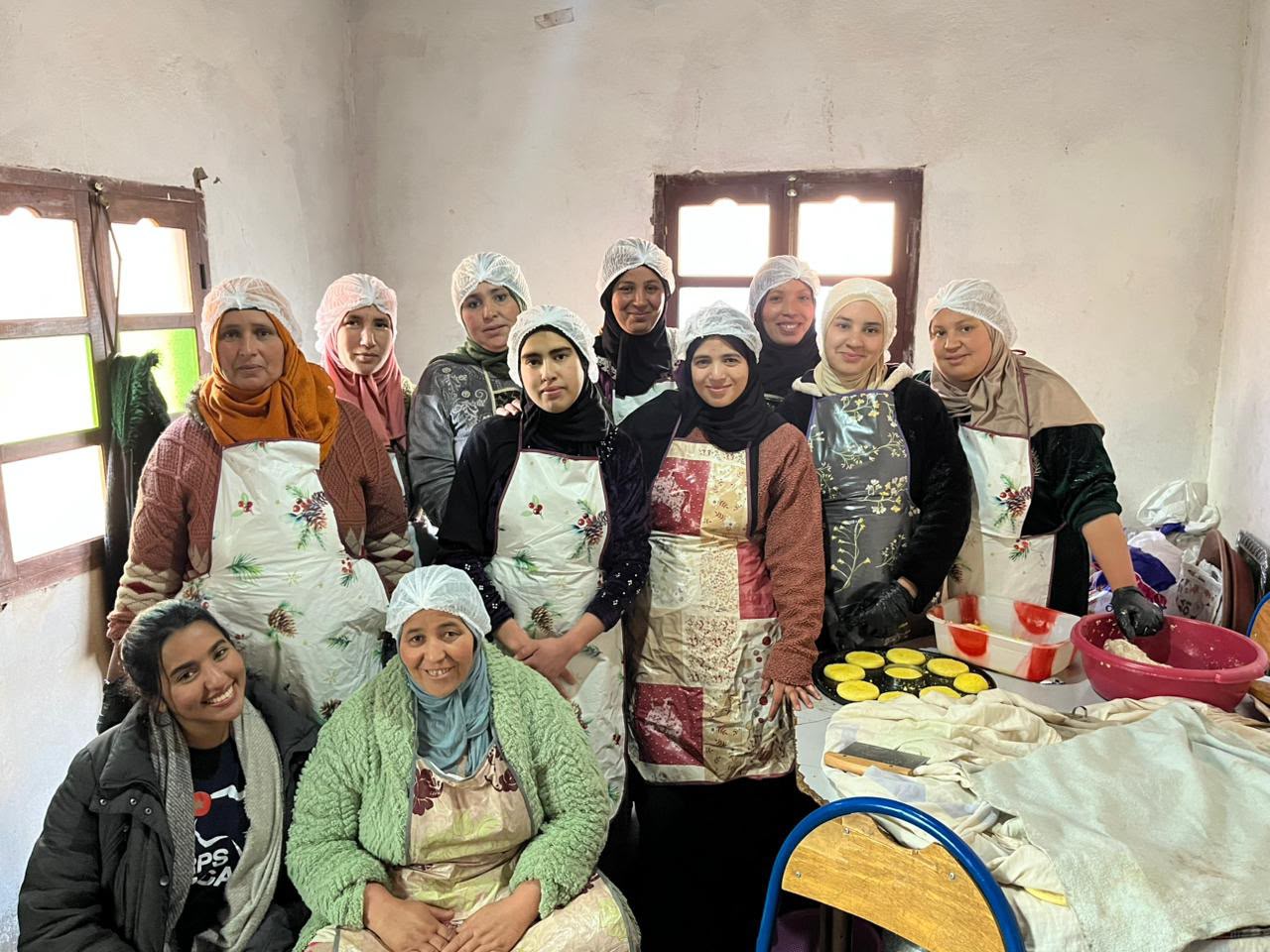
During Ramadan, we had the incredible opportunity to work closely with 20 women from the community, aged between 18 and 35. Among them, some had left school, some were still continuing their education, and a few were living with disabilities. Despite their different backgrounds and challenges, each woman showed remarkable determination and motivation to develop practical skills in traditional Moroccan cooking. We began this journey with a Chbakia workshop led by Hafsa, a young local expert with a passion for Moroccan cuisine and some experience in professional cooking. At first, many women were unfamiliar with standardized techniques and market requirements, so we designed the workshop as a structured training program consisting of five sessions, each lasting five hours, to ensure that everyone could master the skills properly.
After completing the training, the women became active producers, supplying the Educational Complex with 300 kg of Chbakia during Ramadan. This collaboration not only met the complex’s high-quality standards but also allowed us to expand production: each day, the women prepared 440 pieces, divided equally among Batbout, Msemen, and Harcha (220 pieces each). We ensured that the women learned proper measurement, production planning, and quality control so they could consistently meet the demands of the complex and the local community.
The community itself played a critical role in supporting this initiative, contributing materials, labor, and encouragement. The local association, as well as the director of the complex, generously provided funds to purchase additional ingredients and equipment. I personally traveled to Ait Ourir to procure necessary materials and worked closely with Hafsa to supervise the production, helping the women manage quantities and organize each step efficiently.
The impact of this project was deeply rewarding. The Educational Complex received high-quality products, while the remaining 140 pieces were shared within the douar, including students attending the internal school. Seeing the smiles on their faces and hearing their words of appreciation reminded me of why this work matters so much. The women felt proud, confident, and empowered—some even expressed that they didn’t want me to leave and wished I could stay with them longer. This initiative went beyond skills training; it created meaningful connections, strengthened the community, and gave each woman a tangible sense of achievement. I feel truly grateful to have been part of this journey, witnessing firsthand how dedication, collaboration, and care can transform both individual lives and the wider community.
The initiative is estimated to generate meaningful income for the participants. From the production of 300 kg of Chbakia sold at 30 MAD per kg, the group expects to generate 9,000 MAD by the end of the month. In addition, the women are producing around 440 pieces of traditional bread daily, including Batbout (1.5 MAD per piece), Msemen (2 MAD), and Harcha (2 MAD). Depending on the mix sold each day, this represents approximately 660–880 MAD in daily earnings from bread production alone. Beyond strengthening culinary skills, the training has created a practical income-generating opportunity, demonstrating how community-led initiatives can transform traditional knowledge into sustainable economic benefits for women and their families.