
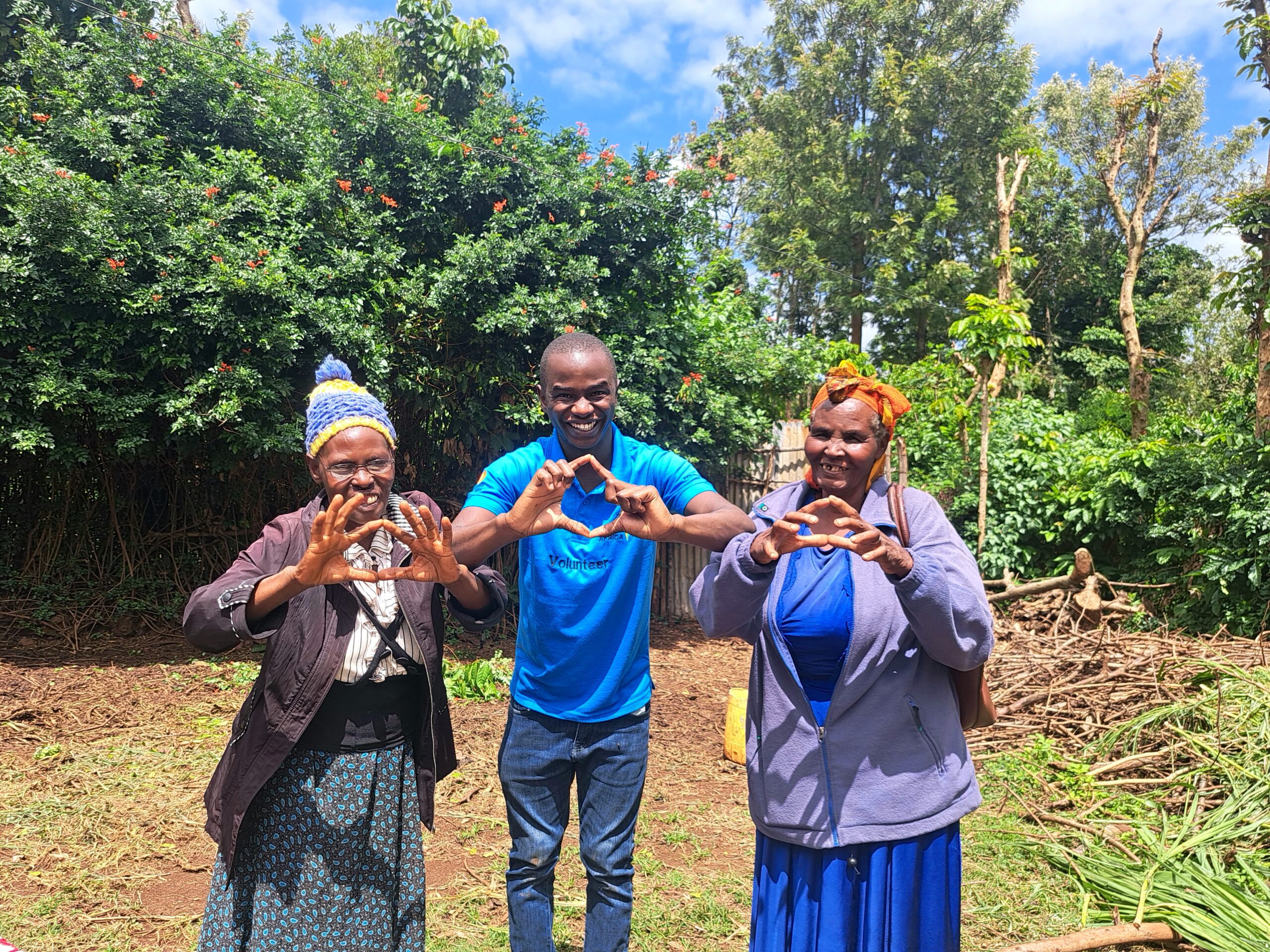
“Working with families transformed my service in ways I did not expect. It moved me from simply ‘doing work’ to truly living with people. I learned that impact is not created from a distance, but in everyday life. It is in sitting together, in showing up, in being present even when words are few.” Muliisa Pneuma is currently serving as an Exchange Volunteer in Ethiopia having completed her service in Uganda.
On this day of 15th May 2026, CorpsAfrica celebrates the International Day of Families. In 1993, the United Nations established the International Day of Families. This was to raise awareness of issues faced by families throughout the world and highlight the important role that families hold in communities.
Exchange Volunteer Muliisa (middle) with her host mother Mesfin (left) and sister (Nezer) walking from collecting water in Bedessa, Bilbo village, Ethiopia
CorpsAfrica Volunteers together with families identify and creatively solve problems leading to social and economic empowerment of members and local communities. Then again, intergenerational solidarity is fostered when Volunteers share and learn from the older host family members. As an Exchange Volunteer in Meru, Kenya, Muzamiru shares that the servant leadership spirit he observed from his host parents-a popular businessman and teacher had a great impact on him through learning how to communicate, mobilise community and build his confidence.
“My psychological safety throughout my service was built around my host mother- Mrs Mutamia. In the evenings, we had conversations as we prepared dinner together. I would open easily to her sharing my challenges of the day. She could encourage, advise and motivate me as this was energizing for my next day.” Muzamiru Exchange Volunteer in Meru Kenya (2024/25). Similarly, developing connections with the younger generation also help older adults to feel a greater sense of purpose and fulfilment as they learn and pour into the young.
Alumn Muzamiru with his host mother (left) and community member during his Exchange Service in Meru, Kenya
Recognizing the important role that families play in local communities, the CorpsAfrica model is built on values that put local ownership at the heart of everything we do. It is upon this premise that the CorpsAfrica Volunteer service starts with Volunteers being hosted in families to facilitate their community integration.
Host families support Volunteers to immerse into the community life, speak the language and appreciate the community culture. Volunteer experiences with their host families show the strength of the spirit of Ubuntu in transforming our local communities and continent.
“My host family did not just welcome me but took me in as their own. There is a strange kind of loneliness that comes with stepping into a community where everything is unfamiliar—the land, the language, the food and even the way people greet each other. When I completed my service as an Exchange Volunteer in Awudome Avenui, a small community in the Ho West district of the Volta region in Ghana, I carried with me memories of my host families who loved me like their own. They opened doors I could not have opened on my own.” Joel K Kakolokombe (Uganda) served as an Exchange Volunteer in Ghana (2024/25).
Joel supporting his host mother to sieve cassava in Awudome Avenui village
Host families provide support Volunteers to immerse in the community. Integration happens in the simplest, most meaningful ways. Collective initiatives such as collecting water, washing clothes, constructing kitchens with energy saving stoves, making vegetable gardens are rhythms that feed into the greater picture of local development.
For Monalisa Chandidya, a Volunteer serving in Solobala village, Malawi, integration came in ways like her host mother training her to prepare local foods like Makaka and Nandolo, learning the local dialect and participating in community gathering. Through holding one-on-one sessions with families in the community, she facilitated the formation of a Junior CorpsAfrica club in the nearby school.
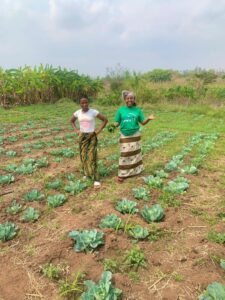
Monalisa Chandidya with her host mother in the family vegetable garden in Solobala village, Malawi
For Faith Langu serving in Tharaka-nithi county in Kenya, it was in the daily routines that sustained homes including grazing goats, feeding hens and gardening. Though the activities were unfamiliar at first, overtime they became part of her routines that contributed to the success of her service. She appreciated how deeply these routines are woven into the fabric of community life.
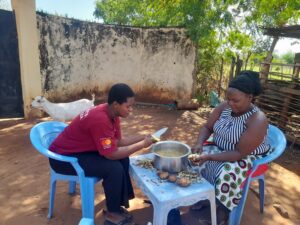
Faith learning peeling potatoes with her host mother in Tharaka-nithi county
“One of the most beautiful things I encountered in Ethiopia was how easily families open their hearts. I arrived as a stranger, yet I was received with warmth that felt familiar. Doors were opened, meals were shared, and slowly, without even realizing it, I found myself being woven into the fabric of family life. It is a kind of generosity that goes beyond hospitality, it is belonging.” Muliisa Pneuma.
Cynthia Adhiambo a Volunteer serving in Kitui County, Kenya states that the simple beginning of being part of a host family became the foundation of her service. It gave her a safe place to grow, test her ideas, and fully be immersed in her service. The family has become part of the journey, shaping and sharing every small impact created together.
Drawing from the Asset Based Community Development model through which CorpsAfrica Volunteers work, families provide social capital which allow members to access resources in terms of labour, knowledge, funds thereby strengthening their capacity to function and attain their current and future goals and objectives.
MonaLisa Kangulu serving in Chipazi in Dedza district, Malawi asserts that her host family supported her in holding conversations with other families leading to the establishment of a community youth club. Drawing from available resources such as family land, labour and group savings, the youth club members started a baking enterprise, a goat farm and sweet potato garden on three acres to generate income.
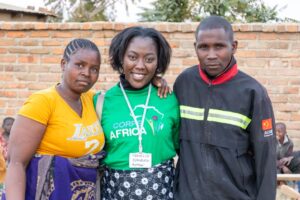
MonaLisa Kangulu with her host parents during her community-based training in Chiphazi Dedza district, in Malawi
For Martin Twesigye, it was the introduction of the Family MUAC initiative, empowering caregivers to monitor the nutritional status of children under five. Furthermore, he supported families in preparing nutritious meals using locally available foods thereby promoting better health in Kyerero village, Kabale district, Uganda.
Premised on the ABCD model, Alumn Muzamiru facilitated several community-led initiatives designed to improve economic resilience and essential resource access for local families. In Meru, Muzamiru facilitated the sunflower oil extraction project; families shifted from selling raw seeds to producing high-value cooking oil thereby acquiring higher incomes. Similarly, the soap making initiative focused on improving household hygiene and income generation. This initiative provided families with a sustainable source of income rather than purchasing expensive, commercially produced soaps from distant markets. For families, this is a dual benefit through reduced expenditure on basic necessities and a new revenue stream that could be used for school fess, medical costs or further agricultural investment.
Recognizing that limited capital is a hindrance to growth, families integrate into Village Savings and Loans Associations. Members contribute small weekly savings; families take out low-interest loans from their savings. A portion of the funds is often set aside for emergencies providing a vital safety net for vulnerable households.
Families enhance the principles of Community Led Development ensuring that every initiative reflects the priorities, strengths, and vision of the people that Volunteers work alongside. Working closely with families greatly strengthened the sustainability of the interventions. When household members actively participate involved, they share responsibility and own activities. This ensures continuity, for instance, if one member was unavailable, others could continue managing activities like feeding livestock or maintaining kitchen gardens.
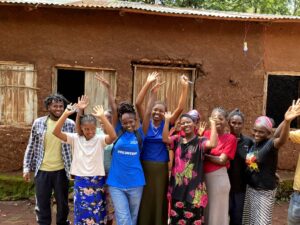
Muliisa with some of the youth in the community after training in Bedessa, Bilbo village, Ethiopia
CorpsAfrica is therefore celebrating families all across the continent for nurturing and supporting young African leaders to positively contribute to their communities. Family friendly laws, policies and systems need to be implemented to foster holistic community socio-economic development. By shifting from individual assistance and towards group-based models, families are embedded into the very fabric of the community.