
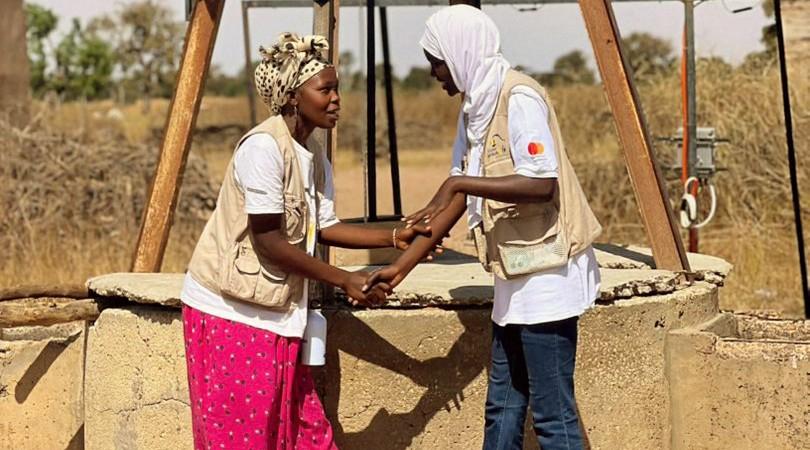
In every country, small cultural habits quietly reveal who we are. For Senegal, that habit is greetings: an expression of hospitality, generosity, and human connection.
Back home in Kenya, greetings are simple. Efficient.
A quick “Sasa?” — “Poa.”
And life moves on. Then I arrived in Senegal.
Greetings are the Conversation
Here, greetings are not a warm-up to conversation.
They are the conversation.
In my community, you don’t just greet someone; you check in. Not the quick Kenyan “Uko poa?” No. I’ll meet one community member and the greeting begins, something like:
- Jamm nga yendoo: Peace in your day
- Jamm nga ngoon: Peace in your night
- Nanga fanaane? How did you sleep?
- Nanga def? How are you?
- Naka waa kër ga?: How is your family?
- Naka sa yaram?: How is your health?
- How is the weather in Kenya?
Before I even get to my second sentence about where I’m going or what I need to do, another person arrives, and then another. Suddenly, I’m in a full greeting circle with everyone checking on everyone.
Senegal holds its communities together through greetings. People may have limited resources, but they are unbelievably rich in connection.
Back home, you greet strangers sometimes. In Senegal? You greet everyone.
Even goats look at you like, “Well? Aren’t you going to say something?”
Elders receive the most respectful greetings. You don’t just say hello; you perform it. Soft voice, gentle bow, and right hand forward, like you’re offering your entire destiny.
Here, greetings check on your health, your family, your mood, and your peace. People greet you with jamm (peace) with a sincerity that feels like a warm cup of tea. You don’t just pass someone; you pause, smile, and exchange humanity.
Lessons Beyond Words (and Schedules)
Some mornings I wake up with a clear plan: visit the women’s soap group, meet the chief about a project idea, or help someone write a document.
I have tasks. I have timelines.
But the community has its own rhythm; and greetings always come first.
Sometimes I arrive somewhere with a five-minute task and leave thirty minutes later, having greeted every human being (and half the chickens) along the way. By the time I’m done, I’ve also collected all the latest village gossip: who’s building a new house, whose goats escaped, which neighbor overslept, and which uncle fell asleep under a mango tree again.
Time management, it turns out, is a flexible concept here. At first, I thought it was just cultural formality. But the more I lived it, the more I realized this is compassion disguised as routine.
People greet because they genuinely care. They believe relationships are built in small moments, that peace is something you speak into someone’s morning, and that time spent acknowledging each other is never wasted. Relationships matter more than speed, and presence is more important than productivity.
Sometimes the greetings overwhelm me. Sometimes they make me laugh. Sometimes they completely destroy my schedule. But every day, they teach me something about humanity:
Slow down. See people. Let people see you.
Full Circle; Finding belonging
Ironically, it took living outside Kenya to appreciate how our own “Habari?” and “Mambo?” carry warmth in their own way. We are different, yes ; but we share something important:
a belief that people matter.
Senegal just expresses it more slowly. More intentionally. More beautifully.
Now when someone says “Nanga def?” I don’t panic. I don’t rush. I settle into the rhythm. Because this isn’t about words. It’s about belonging.
We may not greet for three minutes back home, but we still understand the magic of connection. Senegal just chooses to take the scenic route.
And honestly?
The world could use a little more teranga,
a little more jamm,
a little more genuine:
“How are you… really?”
How does your culture or workplace acknowledge humanity before getting to business? I’d love to hear your stories in the comments.