
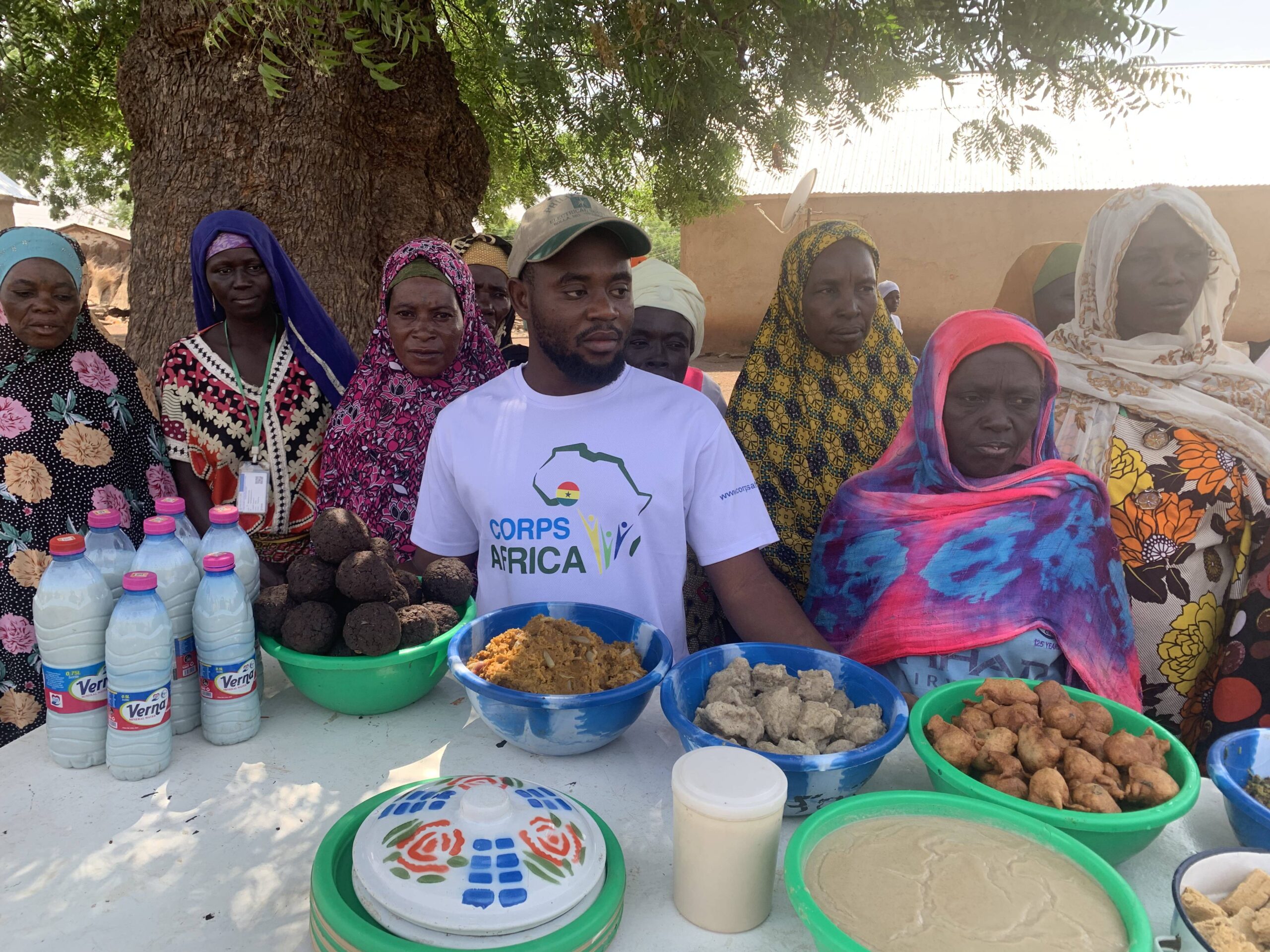
When I began working closely with the communities of Kpalikori, I noticed something both promising and concerning. Soya beans were available and accessible, yet they were not fully utilized in household meals. Despite being highly nutritious and affordable, many families lacked the knowledge and skills to process and incorporate soya beans into their daily diets. As a result, dietary diversity remained low, and an opportunity to improve both nutrition and household income was being overlooked.
Through community conversations and needs assessments, women and caregivers shared their desire to learn practical skills that could help them better nourish their families while also creating income-generating opportunities. Together, we identified food utilization training focused on soya beans as a sustainable, community-driven solution.
With collaboration and support from MEDA Ghana, we organized a hands-on food demonstration activity that brought together 67 participants from Kpalikori, Nyoli, and Botingli. The training emphasized practical learning; participants did not just observe; they actively engaged in processing soya beans and preparing value-added products such as soya milk and other soya-based meals. We discussed proper preparation techniques, hygiene practices, and the nutritional benefits of soya beans, especially for children, pregnant women, and the elderly.
Beyond the technical skills, the activity created space for dialogue and shared learning. Participants asked questions, shared their experiences, and explored how these new skills could be adapted within their households. Many expressed surprise at the versatility of soya beans and their potential to improve meal quality without increasing food expenses.
One of the most impactful outcomes was the visible shift in perception. Soya beans were no longer seen as just another crop, but as a powerful tool for better health and economic empowerment. Participants gained confidence in preparing diversified meals and recognized opportunities to produce and sell soya-based products within their communities. The idea of transforming a locally available resource into both nourishment and income sparked enthusiasm and motivation.
As a CorpsAfrica Volunteer, this experience reaffirmed the importance of listening first. Sustainable change does not come from imposing solutions, but from working alongside communities to identify their strengths and build upon them. The knowledge and resources needed for transformation often already exist within the community; what is sometimes missing is access to information and practical guidance.
The food utilization training was more than a cooking demonstration; it was a step toward strengthening community resilience. By equipping individuals with skills to improve nutrition and explore small-scale entrepreneurship, we are supporting healthier families and creating pathways for economic empowerment.
In Kpalikori, the humble soya bean has become more than just food. It is now a symbol of possibility; proof that when communities are empowered with knowledge and practical skills, sustainable change can begin from within.


