
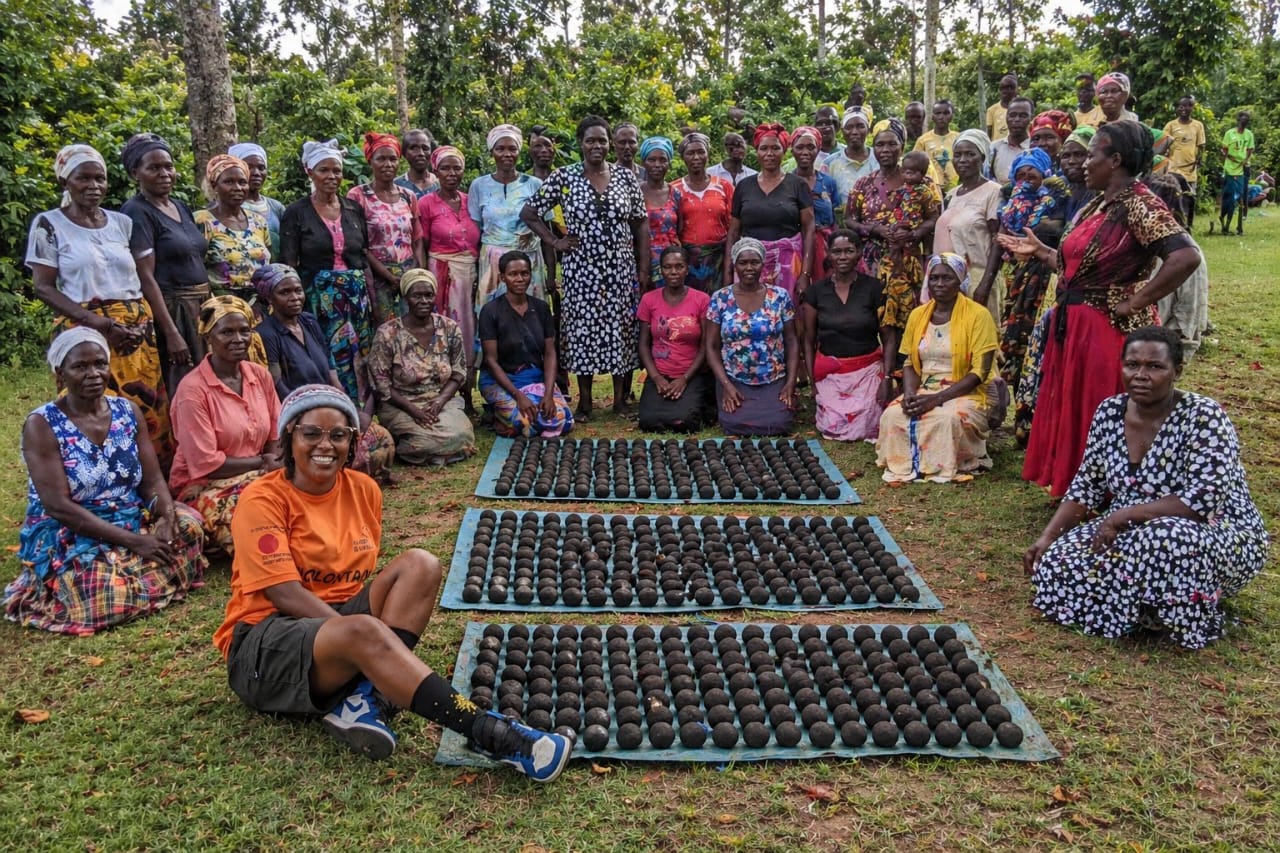
In the heart of Western Kenya, within the vibrant communities of Kakamega County, specifically Esumeiya and Eburenga, a powerful transformation is taking place. Under the leadership of Irakoze Solange, a CorpsAfrica Kenya Volunteer, a group of 100 determined women has come together with a shared vision: to create sustainable livelihoods while protecting their environment.
Through the production of charcoal briquettes, these women are not only generating income but also driving meaningful social and environmental change.
A Sustainable Solution to Environmental Challenges
Traditional charcoal production has long been a major contributor to deforestation in Kenya. However, the introduction of charcoal briquettes offers an eco-friendly alternative.
Made from recycled organic materials such as agricultural waste, sawdust, and charcoal dust, briquettes significantly reduce the need for cutting down trees. This innovative approach promotes responsible waste management while supporting environmental conservation.
Through their collective effort, the group is currently producing over 400 briquettes, providing a cleaner and more sustainable fuel option for their community.
- Reduced deforestation
- Lower carbon emissions
- Cleaner and more sustainable cooking solutions
Women at the Center of Change
At the core of this initiative are resilient women who are redefining their roles within their communities. Once faced with limited economic opportunities, they are now entrepreneurs, leaders, and changemakers.
With guidance and support from Irakoze Solange, a CorpsAfrica Kenya Volunteer, the group has benefited from training and collaboration, gaining valuable skills in briquette production, small business management, and teamwork and leadership.
Each briquette produced represents more than just a source of fuel—it symbolizes independence, dignity, and hope.
The income generated enables these women to support their families, educate their children, and improve their overall quality of life. More importantly, it strengthens their confidence and amplifies their voices within the community.
Building Stronger Communities
The impact of this initiative extends beyond individual households, contributing to broader community development. By working together, the women have built a strong support network that promotes unity, cooperation, and shared responsibility.
In addition, the availability of affordable and eco-friendly briquettes benefits the wider community by providing a cleaner alternative to traditional fuels. This helps reduce health risks associated with indoor air pollution while improving everyday living conditions.
Challenges and Determination
Like many grassroots initiatives, this project faces challenges, including limited access to resources, financial constraints, and market opportunities. However, the determination and resilience of these women, supported by committed leadership, continue to drive the project forward.
With increased support, training, and visibility, this initiative has the potential to expand its reach and impact even more communities across the region.
A Vision for the Future
The charcoal briquette project in Kakamega is more than an income-generating activity; it is a movement toward sustainability and empowerment.
Led by Irakoze Solange, a CorpsAfrica Kenya Volunteer, it highlights the power of community-driven solutions and demonstrates how women, when given the opportunity, can lead transformative change. As the initiative grows, it promises a greener environment, stronger communities, and a more inclusive local economy.
“Through briquette making, we are not only earning an income, but we are also protecting our environment and building a better future for our children.”
Conclusion
The story of the women in Esumeiya and Eburenga is one of resilience, innovation, and hope. Through charcoal briquette production, they are proving that small, locally driven initiatives can create lasting impact.
With the leadership of Irakoze Solange, a CorpsAfrica Kenya Volunteer, this initiative stands as a powerful example of how empowering women and promoting sustainability can transform entire communities.