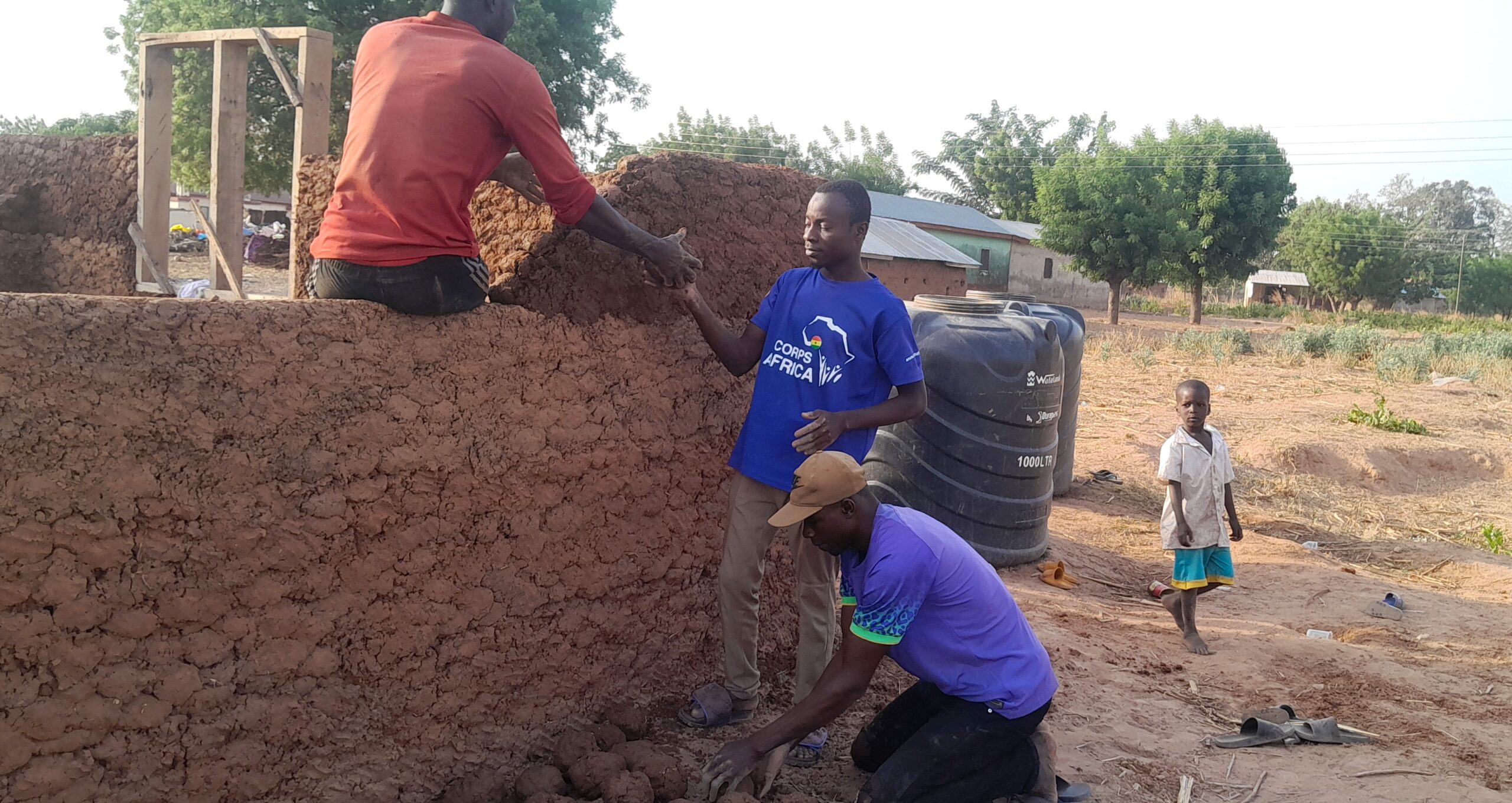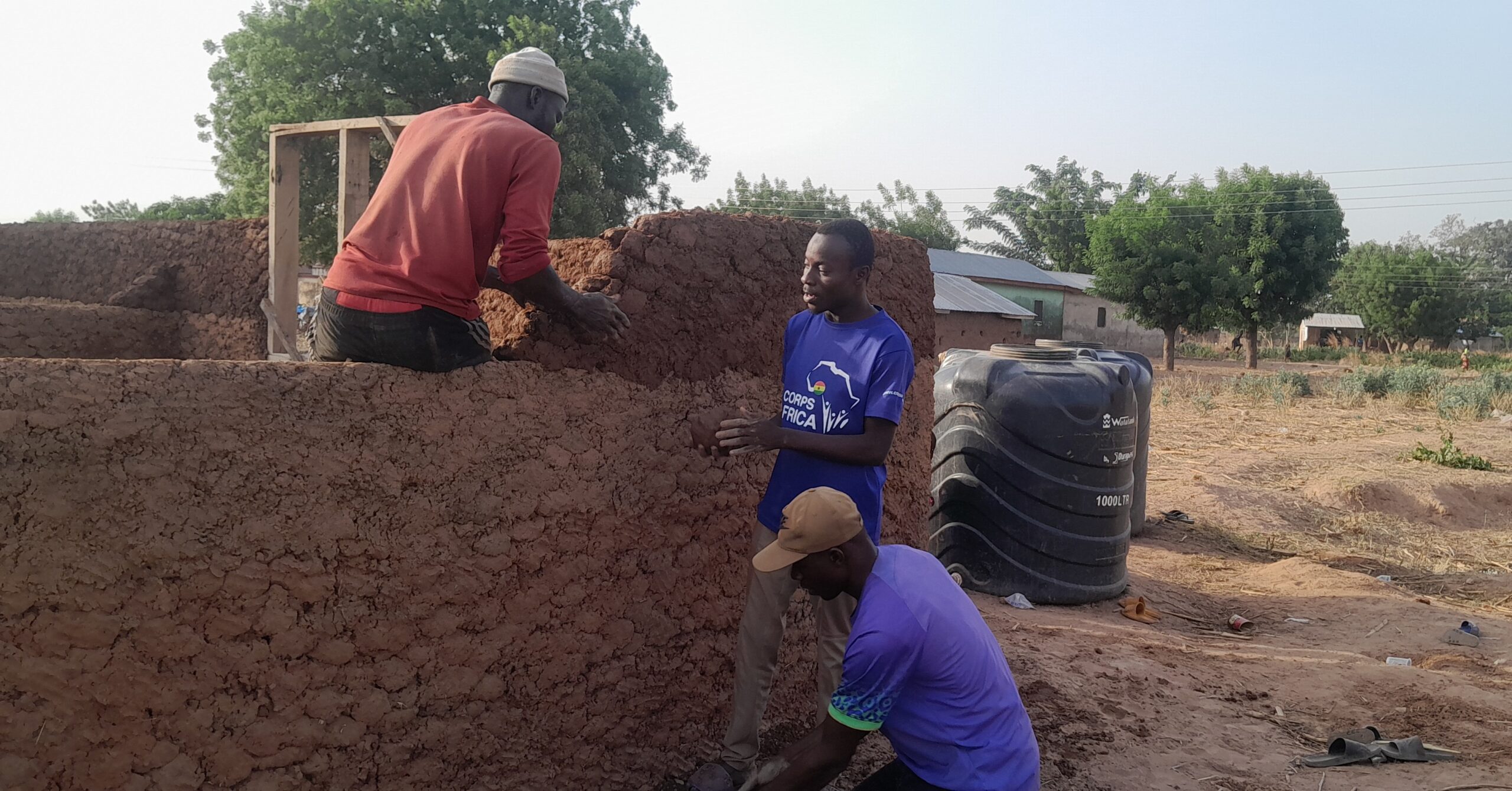
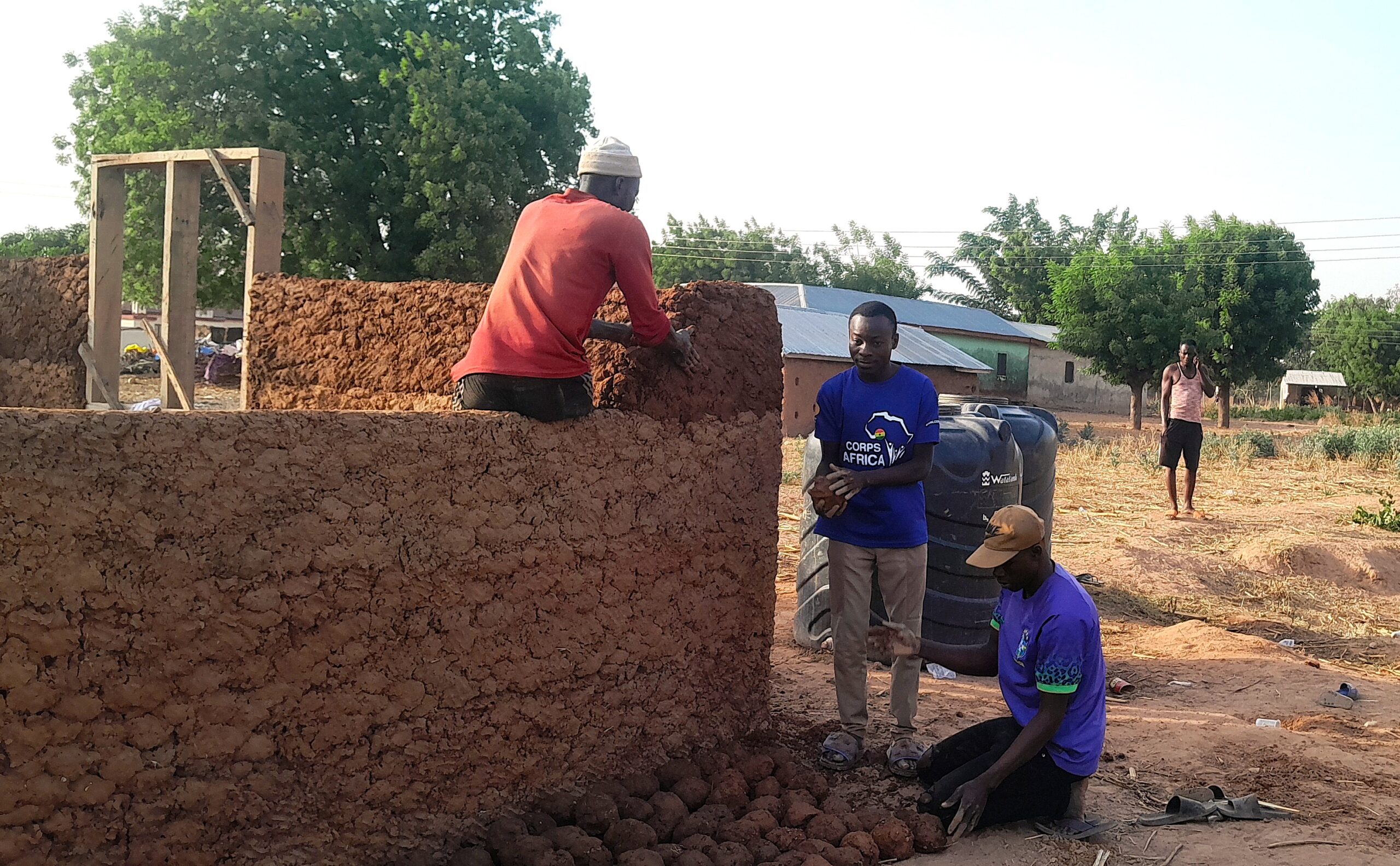
I stood quietly, watching as bare hands shaped the earth into walls. No cement. No blocks. No machines. Just soil, gravel, sand, and patience. In that moment, I realised I was witnessing a traditional method of building I had never seen before; even in Northern Ghana, my home. As a CorpsAfrica/Ghana Volunteer, this experience reminded me that sometimes the greatest lessons come from returning to our roots.
Houses in this community are built using materials sourced directly from the environment. The walls are made from a mixture of soil, laterite gravel, and sand. Builders carefully compact the moist mixture layer by layer, with each layer about 600 millimetres high. After a layer is placed, it must dry before the next is added, making construction a slow and deliberate process that cannot be rushed.
This method can only be used during the dry season. Rain can destroy the walls before they set, so communities carefully plan construction to finish well before the rains begin. Once the walls reach the desired height, roofing is done immediately to protect the structure. Delaying this step risks undoing weeks of hard work.
Watching this process reminded me of the Asset-Based Community Development (ABCD) approach. Instead of focusing on what the community lacks, this method relies on what they already have: local materials, knowledge, skills, and collective effort. The earth beneath their feet becomes a resource, and the people themselves are the drivers of development. It is a clear example of how communities can harness their own assets for sustainable progress.
What impressed me most was the communal nature of the work. Building is a shared effort involving cooperation, collective labour, and knowledge passed from elders to youth. This process strengthens both skills and social bonds, showing that development is about more than structures, it is about people and relationships.
Witnessing this traditional building method for the first time deepened my appreciation for the resilience and ingenuity of rural communities. It reinforced one of the core lessons of my CorpsAfrica journey: meaningful development comes from learning from the community rather than imposing solutions.
“The earth provided the materials, but the community provided the strength.”